Key takeaways
- A squeak that matches your stride is almost always a dry or worn pivot point, a bushing or bearing where the arms and pedal links connect.
- Creaks, clicks and knocks usually mean loose bolts. Snug them with the right hex key, but don’t overtighten.
- A rumble or scrape along the base points to dirty rails or worn roller wheels. Most manufacturers want rails clean and dry.
- Use only the lubricant your manual specifies, often a silicone lubricant or light grease. Skip WD-40 on pivots.
- Grinding inside the housing, a clunk every revolution or wobbly pedal arms need a technician.
A squeaky elliptical is one of the most common cardio complaints, and usually one of the easiest to fix. It’s rarely serious if you catch it early, but noise is also how an elliptical tells you something is wearing. The trick is to find the source before you start spraying things, because the wrong product in the wrong place can make the problem worse.
Where elliptical noises come from
An elliptical has more moving joints than most cardio machines. The main noise makers are:
- Pivot points: the joints where pedal arms, handlebars and linkages connect, each riding on a bushing (a plastic or bronze sleeve) or a sealed bearing.
- Hardware: the dozens of bolts holding the frame, pedals and handlebars together, which vibration slowly loosens.
- Rails and roller wheels: on many models, small wheels under the pedal arms roll back and forth along a track.
- The drive inside the housing: crank bearings, the flywheel, a drive belt and an idler pulley (a spring-loaded wheel that keeps the belt tight).
- The frame and feet: an unlevel machine flexes and creaks.
Match the sound to the source
Pedal slowly and listen. Then take your hands off the moving handlebars: if the noise stops, it’s in the upper arms. Pedal backward too. If someone else pedals while you listen near each joint, keep your hands and face well clear of moving parts.
| Sound | Likely source | DIY fix? |
|---|---|---|
| Squeak once per stride | Dry pivot bushing or bearing | Yes: clean and lubricate |
| Squeak only when using the arms | Upper handlebar pivot | Yes: lubricate, check bolts |
| Creak, click or knock under load | Loose bolt, pedal or mount | Yes: tighten |
| Rumble or scrape at the base | Dirty rail or worn roller wheel | Clean; replace worn wheels |
| Clunk once per revolution | Crank arm or crank bearing | Technician |
| Grinding or whirring inside | Flywheel or idler bearing, drive belt | Technician |
Before you start: safety and tools
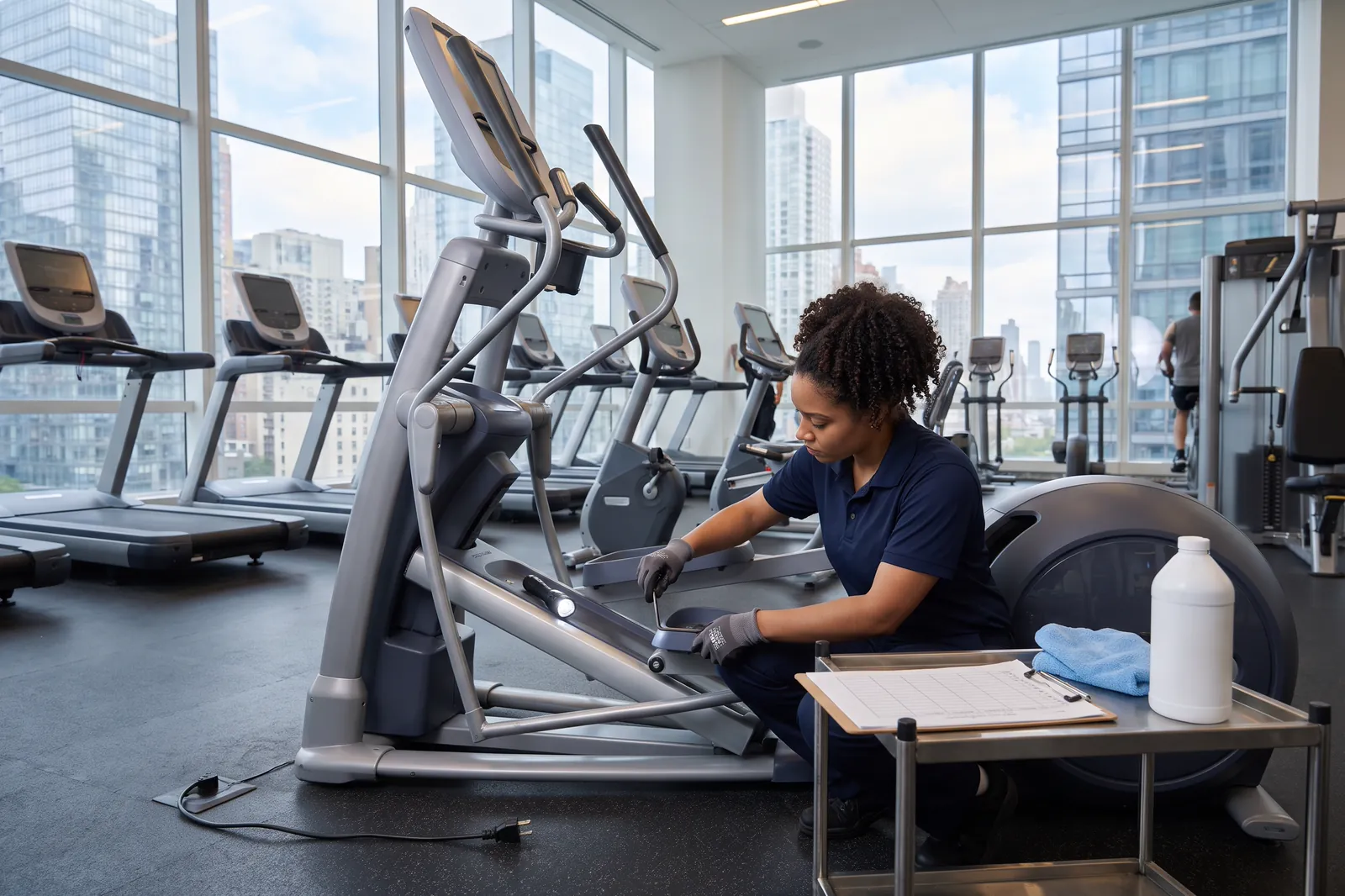
Unplug the elliptical if it has a power cord, and keep children and pets out of the room while you work. You’ll need:
- The hex keys and wrenches that came with the machine, or a metric set
- The lubricant your owner’s manual specifies, plus clean, lint-free cloths
- A flashlight and the manual’s diagram of lubrication points
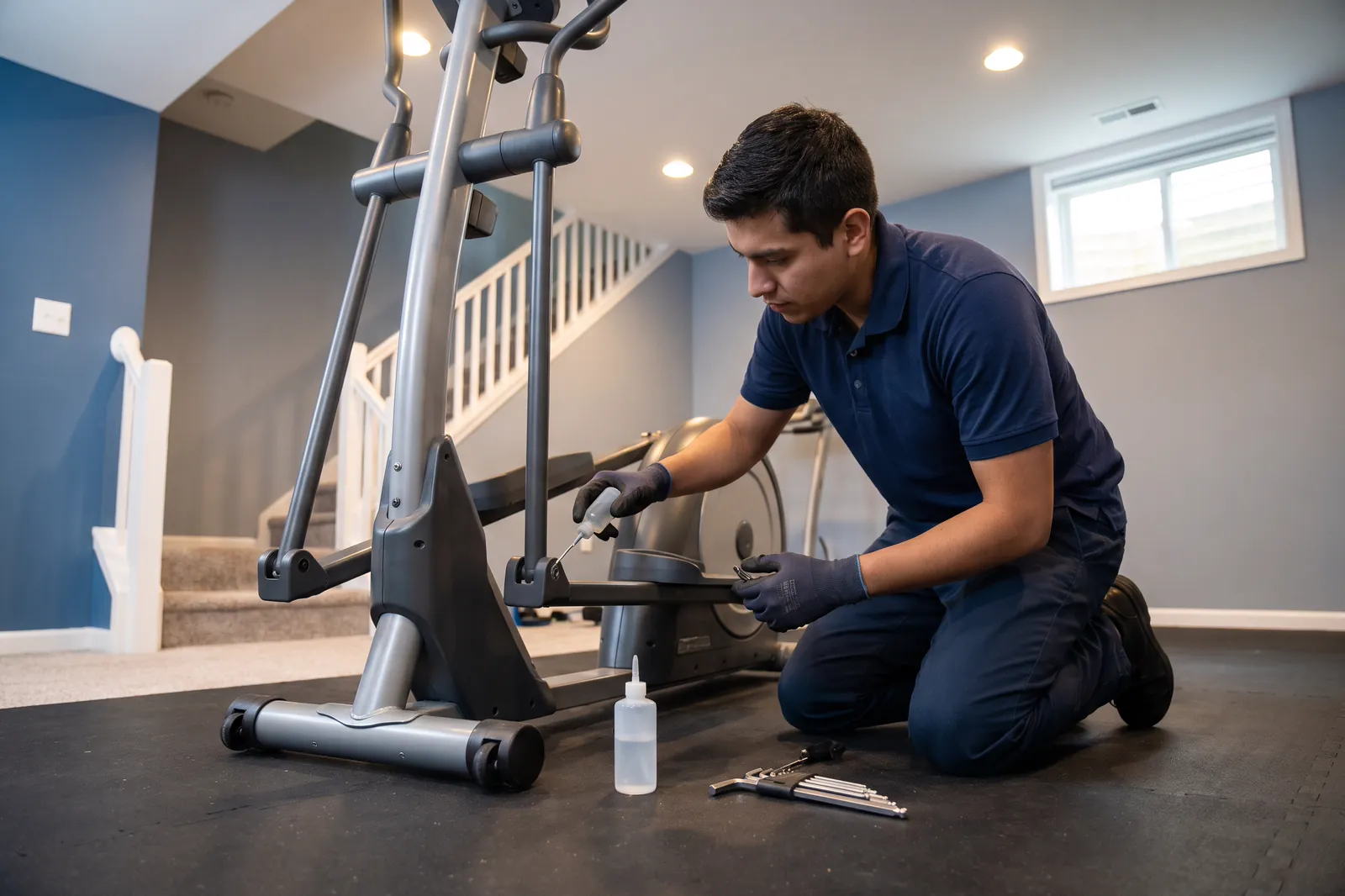
Fix 1: Clean and lubricate dry pivot points
- Find the pivots in your manual. Common spots are where the pedal arms meet the frame, where the handlebars pivot on the upright, and where the pedal links meet the crank.
- Wipe each joint clean so you don’t push grit into it.
- Apply a small amount of the specified lubricant where the shaft enters the bushing, then move the joint through its full range a few times.
- Wipe off the excess. Extra lubricant just collects dust.
Some bushings are self-lubricating and the manual will say not to oil them. Avoid WD-40 and other penetrating oils on pivots: they quiet a squeak for a day, then wash out the original grease and attract dust. If a pivot squeaks again within days, the bushing is probably worn. The proper fix is to remove the axle bolt, clean and grease the shaft and replace the bushings, which means supporting the arm’s weight and reassembling it correctly.
Fix 2: Tighten loose hardware
Work from the ground up: stabilizer and base bolts, pedal platform bolts, pedal arm bolts, then handlebar and console mounts. Seat the hex key fully so you don’t round the bolt heads. Snug anything with play, but don’t crank pivot bolts down hard; overtightening squeezes the bushing and makes the joint bind and squeak. If a bolt keeps working loose, its threads or washer may be damaged.
Fix 3: Clean the rails and roller wheels
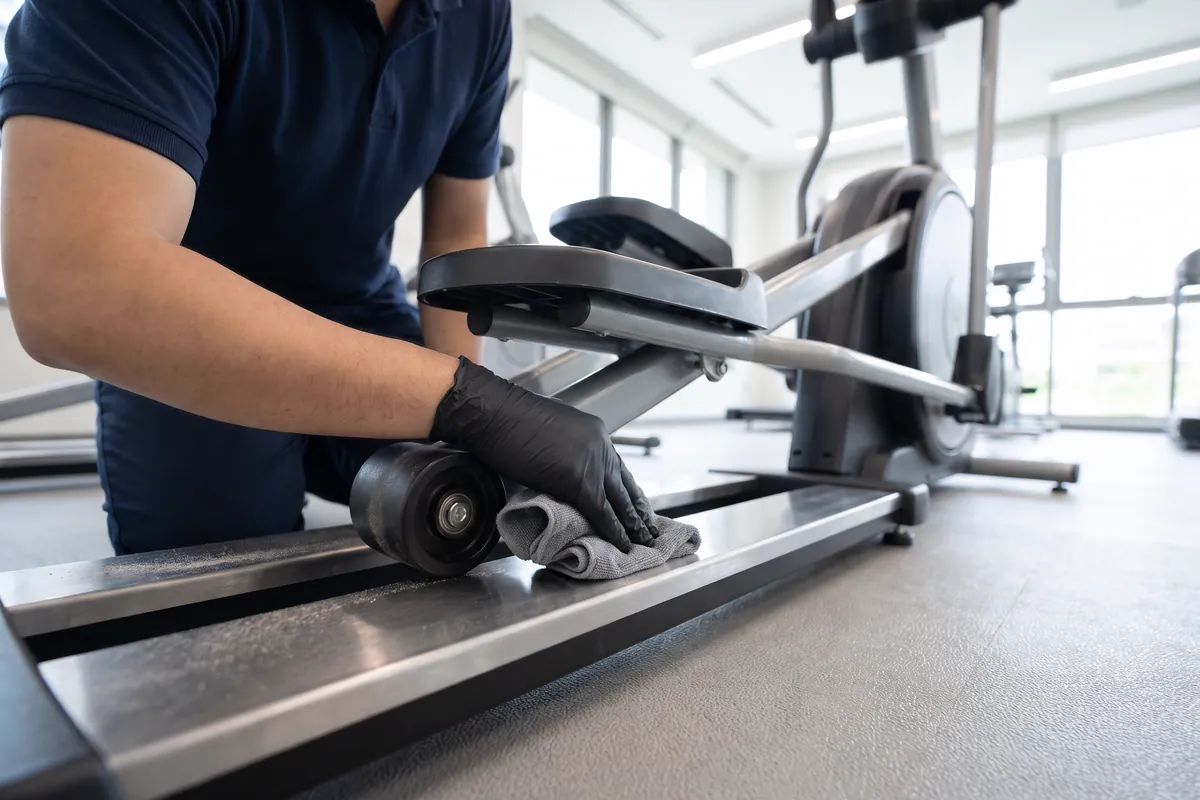
If your elliptical has wheels on a track, a rumbling or scraping sound usually means grit. Wipe the rails and wheels with a clean, slightly damp cloth, dry them, and vacuum under the machine. Spin each wheel by hand: it should turn smoothly without flat spots, cracks or wobble. Most manufacturers want rails kept clean and dry, because lubricant there traps grit and can wear flat spots into the wheels, so only lubricate the rails if your manual says to.
Fix 4: Level the machine
An elliptical that rocks even slightly twists its frame with every stride, and that creaks. Older apartments and houses often have floors that aren’t flat. Adjust the leveling feet until the machine sits firmly on all of them, and use a firm equipment mat to spread the load and protect the floor. Recheck after the first week of use.
Noise still there? A certified technician can open the shrouds, find the exact joint or bearing, replace worn bushings, wheels or belts and test the machine under load. See what’s included in elliptical repair; you’ll get a written quote before any work starts.
When to call a technician
Stop using the elliptical and book an inspection if:
- The noise continues after you’ve cleaned and lubricated the pivots, tightened the hardware and cleaned the rails
- You hear grinding or whirring from inside the housing, which usually means flywheel or idler bearings or a worn drive belt
- There’s a clunk on every revolution, which points to the crank arm or crank bearings
- You feel side-to-side play in the pedal arms or handlebars
- You see cracks in the frame or welds
- It’s a commercial or building machine that needs to stay safe for many users
Regular care stops most squeaks before they start. Fold pivot and bolt checks into your gym equipment maintenance schedule, or let a preventive maintenance plan handle it.