Key takeaways
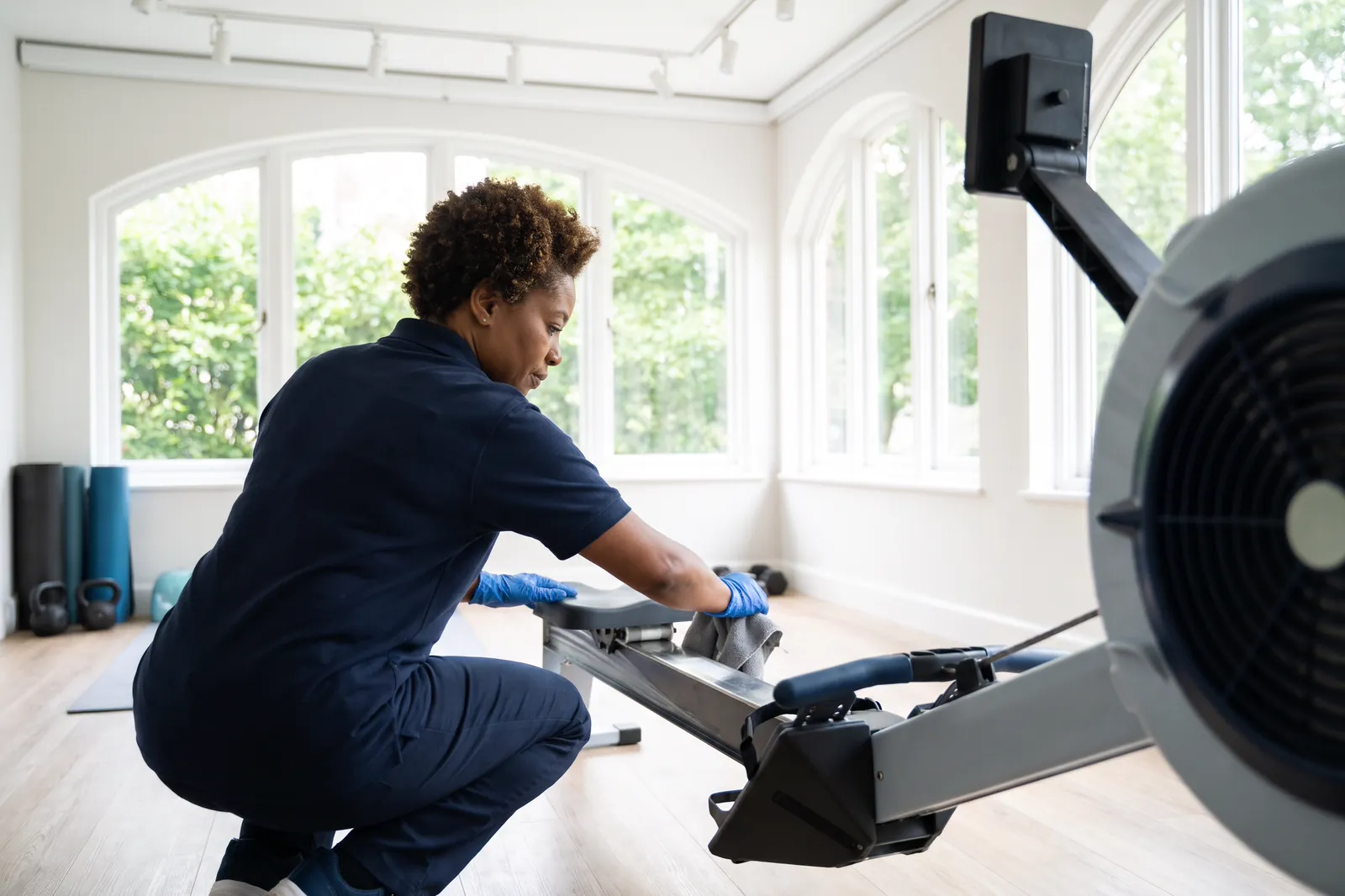
- Wipe the seat rail and seat rollers regularly. A clean rail does more for a smooth stroke than anything else, and most manufacturers don’t want it lubricated.
- Chain rowers need the chain cleaned and lightly oiled on a schedule. Strap rowers need the strap inspected, never oiled.
- Air rowers collect dust in the fan housing; water rowers need purification tablets and the right fill level.
- Check foot straps, the handle and frame bolts monthly. A frayed strap or slipping footrest is a safety issue.
- Grinding, a chain that jumps, a handle that won’t retract or a leaking tank needs a technician.
Rowing machines have fewer parts than treadmills or ellipticals, which is exactly why they get ignored until the stroke turns jerky or noisy. A few minutes of care each week and a short monthly check prevent most of the problems technicians see: grimy rails, dry chains, frayed straps and dust-choked fans. Your owner’s manual is the final word for your model; this guide covers what applies to most rowers.
Know your rower type
- Air rowers use a fan flywheel, usually driven by a chain. Resistance rises the harder you pull.
- Magnetic rowers use magnets near a metal flywheel, usually driven by a strap or belt. They’re quiet and have few wear parts.
- Water rowers spin paddles in a sealed tank of water, usually with a strap.
- Hydraulic rowers use one or two oil-filled pistons on the arms. Common on compact, budget models.
Before any maintenance, unplug the rower if it has a power cord, keep children away, and never pull the handle while someone has their hands near the chain, strap or fan.
Seat rail and seat rollers
The seat glides on small rollers along a rail. Sweat and dust on that rail turn into grit that makes the stroke feel bumpy and wears the rollers flat.
- Wipe the rail with a damp cloth after workouts or at least weekly, then dry it.
- Slide the seat off or tip the rower as your manual describes, and check the rollers. They should spin freely, without flat spots or wobble. Pick out any hair or lint wrapped around the axles.
- Don’t lubricate the rail unless your manual says to. Lubricant attracts dust and makes things worse.
Chain, strap and handle return
Chain-driven rowers
Wipe dust and lint off the chain regularly, especially in carpeted rooms. Oil it on the schedule in your manual. A common guideline for chain-driven air rowers is roughly every 50 hours of use, or sooner if the chain looks dry. Put a small amount of light oil on a cloth or paper towel and wipe it along the chain rather than dripping oil, then pull the handle out and back a few times. Avoid heavy grease, which holds dust.

Strap-driven rowers
Never oil a strap. Run it out slowly and look along its full length for fraying, cuts, a glazed surface or stitching coming apart at the handle. A damaged strap can snap mid-stroke, so replace it at the first sign of wear.
Handle return
The handle should glide back smoothly when you let it return. That job falls to an elastic shock cord or a recoil spring. A handle that returns sluggishly, or a chain or strap that goes slack, usually means a worn shock cord or pulley. Don’t let the handle snap back on its own, since that strains the return mechanism.
Flywheel, fan and resistance
- Air rowers: dust builds up inside the fan housing and can change the feel and the sound. Vacuum the housing vents periodically, and more often in carpeted or dusty rooms. Check that the damper lever moves freely.
- Magnetic rowers: move the resistance control through its full range. It should change smoothly without sticking. Don’t lubricate the magnets or flywheel.
- Hydraulic rowers: pistons get hot during long sessions, so let them cool. Check for oil leaks; a leaking cylinder needs replacing.
Water rower tank care
Add the purification tablets the manufacturer recommends on its schedule, commonly every few months, to keep the water clear. Keep the rower out of direct sunlight, which encourages algae, and keep the water at the marked fill level, because the level changes how the stroke feels. Check the plug and seams for drips. Don’t add bleach or other chemicals unless the manufacturer approves them.
Monitor and electronics
Many monitors run on batteries and start acting strangely, with a dim display or erratic stroke counts, before the batteries die completely. Replace the batteries before assuming an electronic fault, and check that the sensor cable is firmly connected at the monitor.
Frame, footrests and storage
Each month, check the foot straps and heel cups for wear, make sure the footrests lock in position, and snug the frame bolts. If you store the rower upright, follow the manual’s instructions for securing it and keep children away from it; an upright rower can tip.
A simple maintenance schedule
| When | What to do |
|---|---|
| After workouts | Wipe sweat off the rail, seat and handle |
| Weekly | Clean and dry the rail; wipe dust off the chain |
| Monthly | Check rollers, straps, footrests, strap or chain, and frame bolts |
| On the manual’s schedule | Oil the chain, vacuum the fan housing, add water tablets, replace batteries |
Using rowers in a gym, building or studio? Heavy use shortens every interval. See how often to service gym equipment.
Want it done for you? Certified technicians service and repair air, magnetic, water and hydraulic rowers on-site, from chains and straps to bearings and monitors. See rowing machine repair or set up a preventive maintenance plan. You’ll get a written quote before any work starts.
When to call a technician
- Grinding or rumbling from the flywheel or fan housing, which usually means bearings
- A chain that jumps, binds or has stiff links after cleaning and oiling
- A handle that won’t retract, or a return cord that has snapped
- A frayed strap or damaged handle connection
- A leaking water tank or hydraulic piston
- A monitor that stays dead or erratic after new batteries
- Cracks in the frame or a seat that rocks on the rail
Squeaks on other cardio machines usually have similar causes; see why your elliptical squeaks.