Key takeaways
- Hours and users drive wear, not months. Estimate weekly hours before you pick an interval.
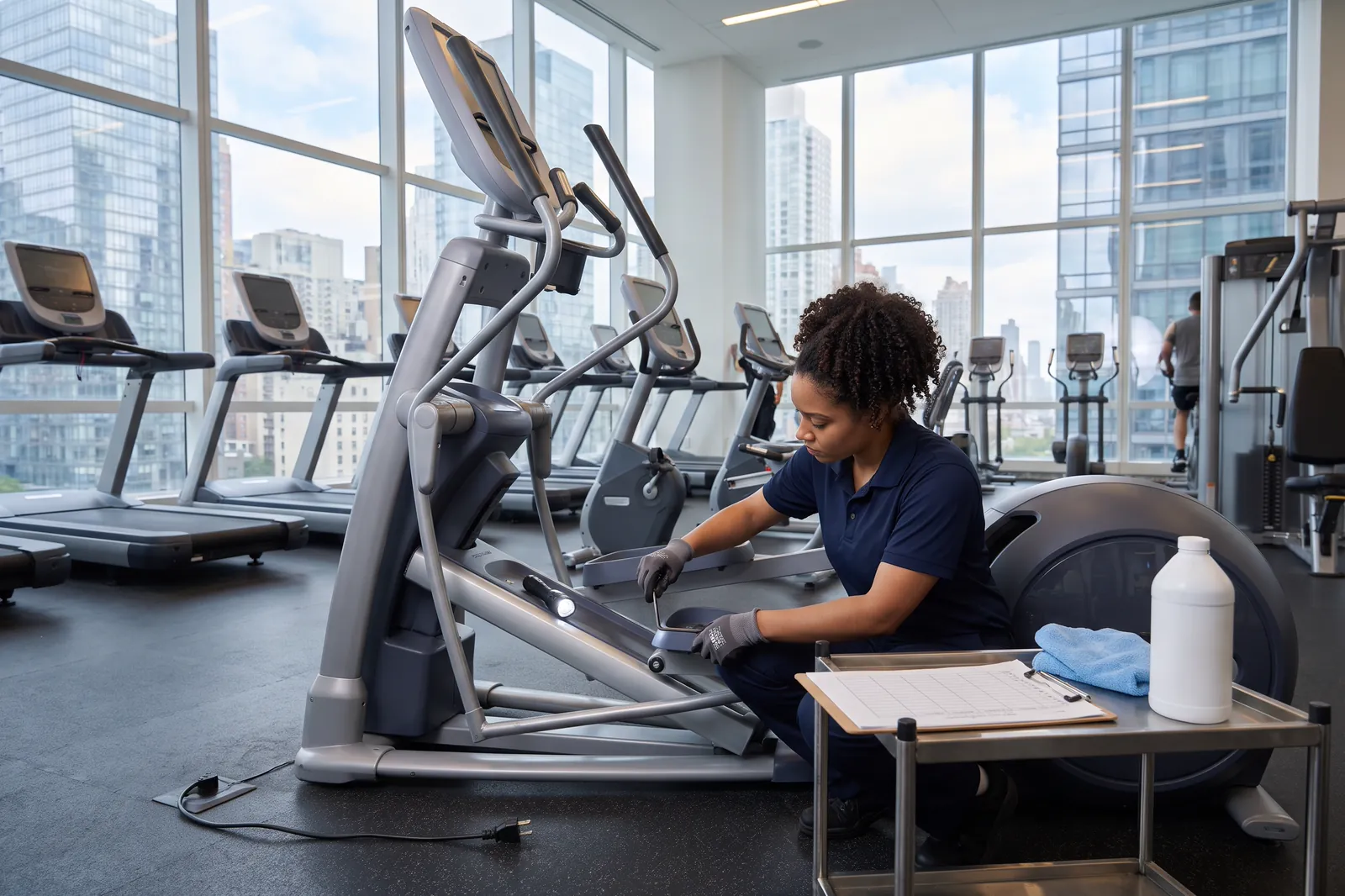
- Light home use: a professional visit at least once a year (about every 6 months for treadmills). Heavy home use: every 3 to 6 months. Building gyms: quarterly. Hotels and busy commercial gyms: monthly to quarterly, plus daily staff checks.
- Motorized machines, older machines and equipment in dusty, damp or cold spaces need service more often.
- New noises, error codes, a slipping belt or visible cable wear mean book now, not at the next scheduled date.
Why usage beats the calendar
Parts wear in proportion to work, not time. A running belt and deck wear with every mile, a drive motor wears with every hour it runs, and a steel cable wears each time it travels over a pulley under load. Two identical treadmills bought at the same time can need very different care: one walked on twice a week, the other run on twice a day by a household of four.
That's why a single “service it once a year” rule doesn't work. The better questions are how many hours a week the machine runs, how many different people use it, and what kind of space it lives in. A quick estimate: sessions per week × average session length × number of regular users. A couple who each run for 30 minutes five days a week put about five hours a week on a treadmill.
Find your usage level
Start with the row that matches your situation. These are general guidelines; if your owner's manual sets specific intervals, those come first.
| Usage level | Typical setting | Professional service | Owner or staff checks |
|---|---|---|---|
| Light home use (1–3 sessions a week, one or two people) | Apartment or house, single household | At least once a year; about every 6 months for treadmills | Wipe down after use; quick monthly look-over |
| Heavy home use (daily, or several regular users) | Family basement or garage gym; training for an event | Every 3–4 months for treadmills; about every 6 months for other machines | Weekly look and listen; monthly hardware check |
| Shared, moderate traffic | Condo, co-op or rental building gym; small office gym | Every 3 months | Weekly walk-through; monthly safety check |
| Shared, heavy traffic | Hotel fitness center, commercial gym or boutique studio | Monthly to quarterly, depending on hours | Daily walk-through; monthly safety check |
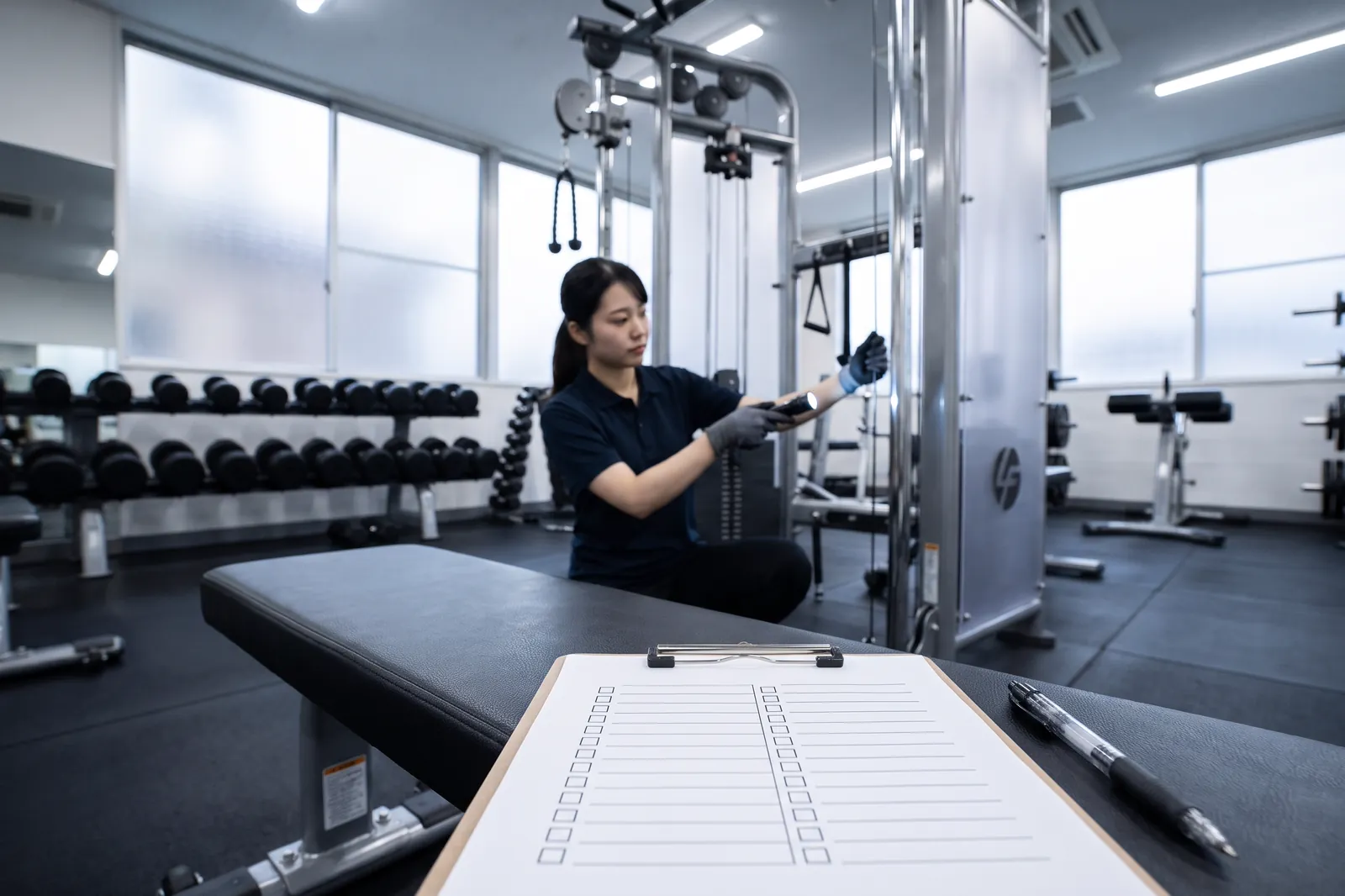
The owner and staff checks matter as much as the technician visits. The gym equipment maintenance schedule lists those tasks machine by machine, from treadmills to cable stations.
Service frequency by facility type
Apartments and houses
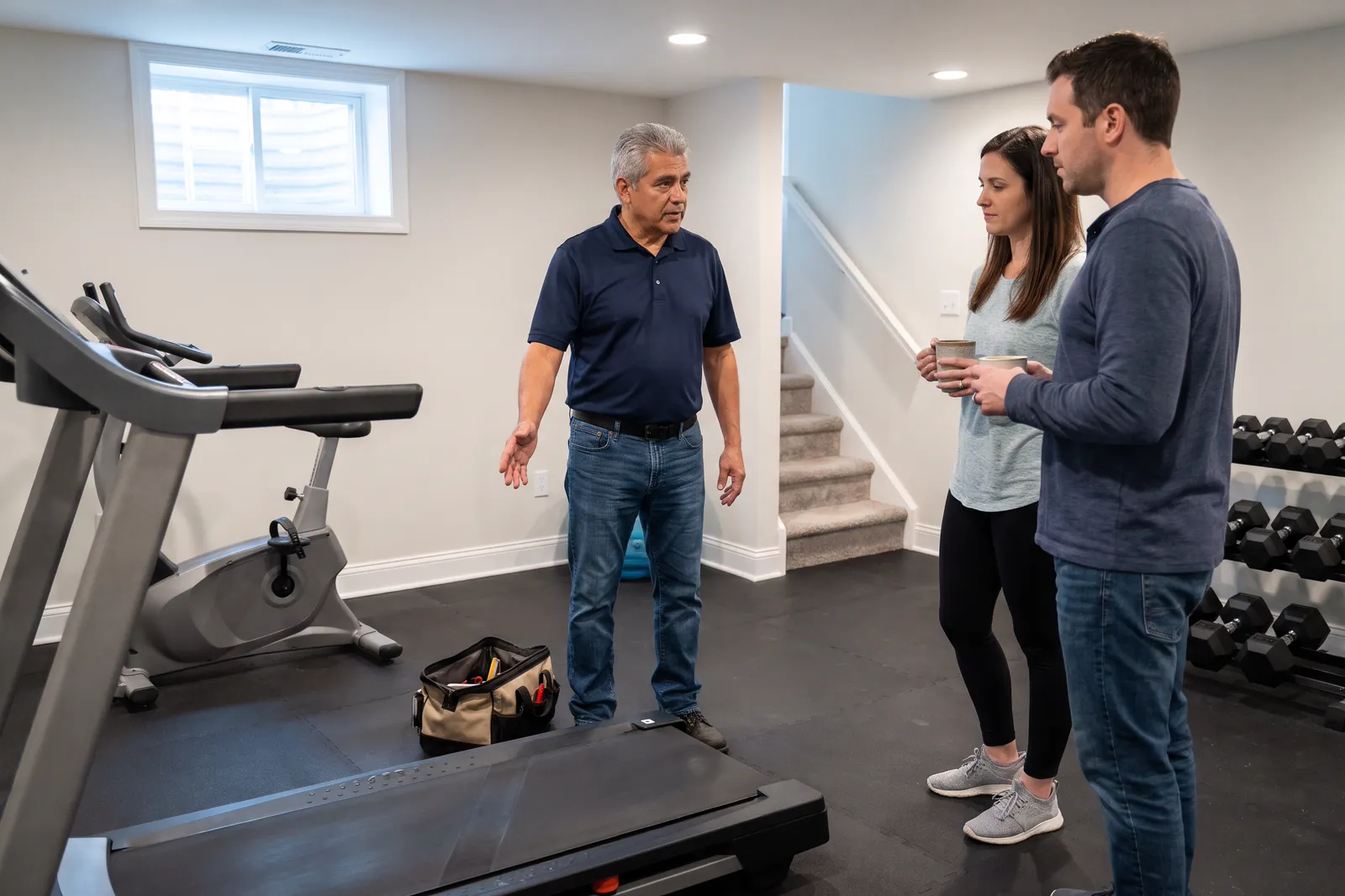
Most home equipment falls into the first two rows. In NYC apartments, machines often sit in tight corners or bedrooms with little airflow, and dust builds up under treadmills fast. In Long Island, Westchester and Staten Island houses, garage and basement gyms add humidity and temperature swings, which is a reason to lean toward the shorter interval.
Condo, co-op and rental building gyms
A resident gym is used by dozens of people who each assume someone else reported the noise. Quarterly professional service plus a weekly walk-through by the super or porter keeps small problems from turning into resident complaints, and the service reports help boards and managing agents plan budgets.
Office gyms, schools and therapy rooms
Use tends to cluster around lunch hours or class times, with long idle stretches in between, so quarterly service usually fits. In physical-therapy and medical fitness rooms, where users may be recovering from injury, smooth and predictable machines matter even more, so don't stretch the interval.
Hotels, commercial gyms and studios
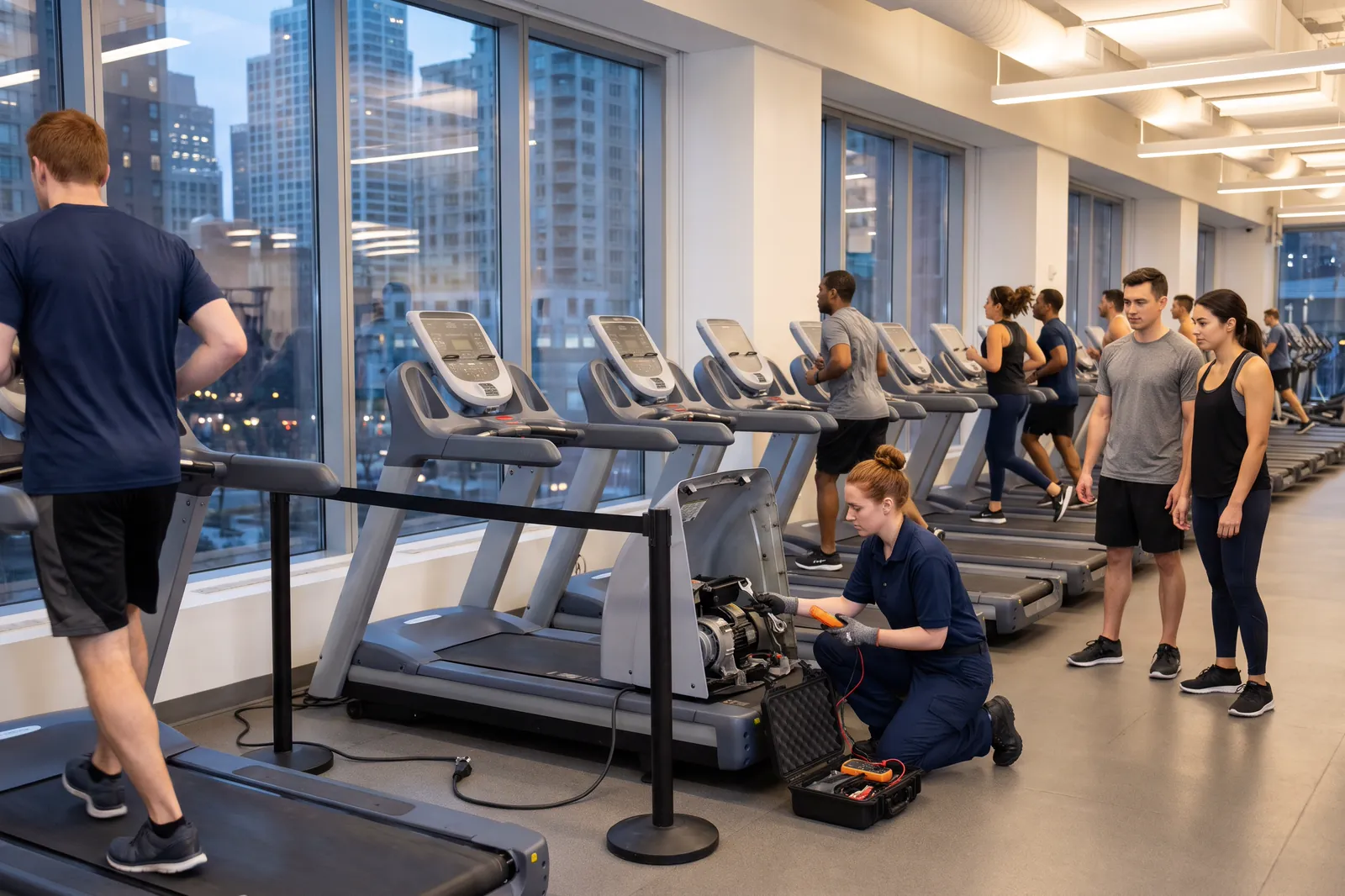
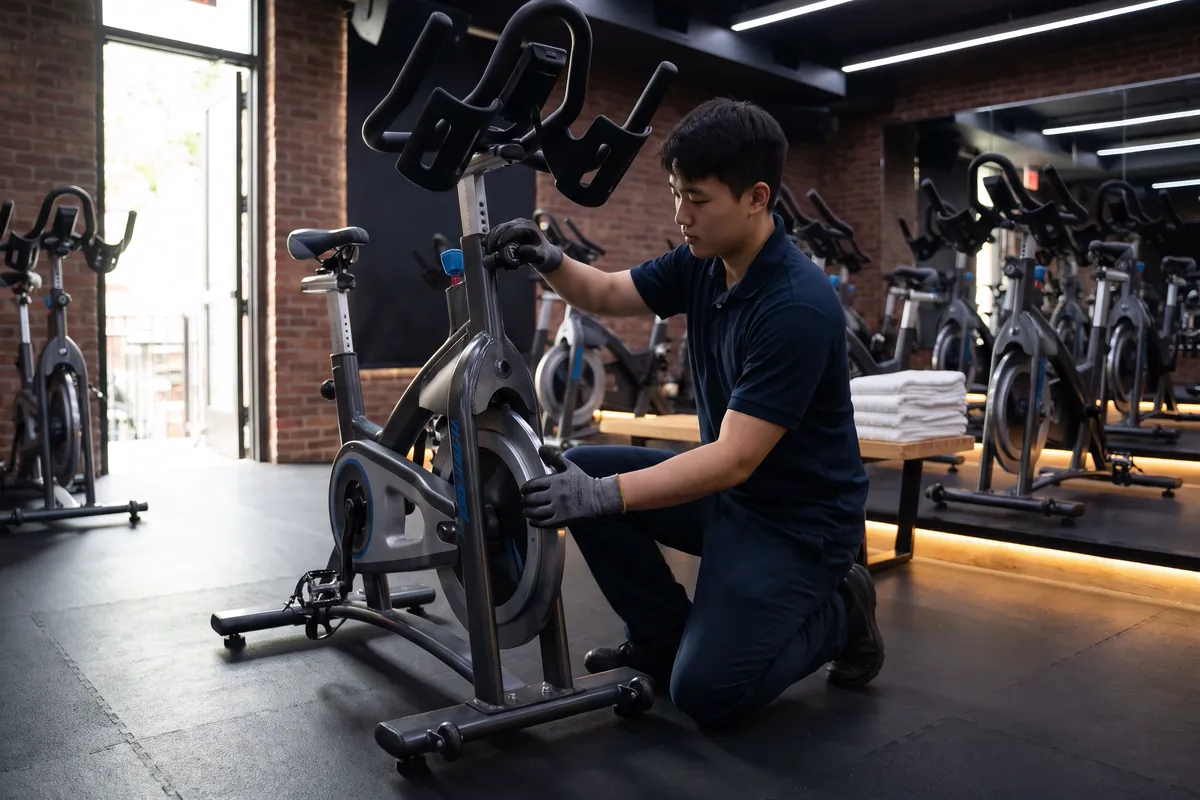
These rooms run long hours with users who don't know the machines. Treadmills and other powered cardio in busy facilities often need monthly attention, while strength equipment and lighter-use areas can sit on a quarterly cycle. Indoor cycling studios put hard, repeated loads on bikes in back-to-back classes, so brakes, pedals and cranks deserve frequent checks. See how hotels maintain fitness centers for a full routine.
Machines that need service more often
Within any usage level, some equipment deserves a shorter interval:
- Treadmills and other motorized machines. Motors, motor controllers (the boards that power the motor) and belts carry the most load and are the most expensive to replace.
- Older equipment. As bearings, bushings and belts age, wear speeds up, and catching it early matters more when parts are harder to find.
- Machines in tough spaces. Dust, humidity, cold garages and spots next to radiators all shorten the gap between services. Winter brings its own problems; see winter gym equipment care in NYC.
- Machines used near their weight rating. Extra load speeds up wear on belts, decks, frames and bearings.
- Connected equipment in daily use. Built-in screens and consoles add cables and connections that benefit from regular checks.
Lighter-duty equipment, such as a selectorized strength machine used a few times a week at home, can often go a full year between professional inspections, as long as you check the cables yourself.
Signs you need service sooner
A schedule sets the minimum. Book a visit right away if you notice:
- New noises: squeaks, clicks, grinding or a rhythmic thump
- Any change in speed, incline or resistance, or a belt that hesitates under your foot
- Error codes, even ones that clear after a restart
- Visible wear on cables, belts, pedals or upholstery
- A burning smell, or a machine that trips a breaker
- More than a year since the last professional check, whatever the usage
If it's a safety problem, such as a frayed cable or an emergency stop that doesn't work, take the machine out of service until it's fixed. The monthly gym equipment safety checklist shows what to look for.
Scheduled plan or call as needed?
Calling only when something breaks can work for lightly used home equipment. For everything else, a fixed schedule usually costs less over time: small issues get caught before they damage other parts, visits happen when you choose rather than in the middle of a busy week, and you build a service record that helps with warranty questions and replacement planning. The value of preventive maintenance covers the trade-offs in more detail.
Not sure which interval fits? Tell us what equipment you have, how many people use it and where it lives, and we'll suggest a preventive maintenance schedule that matches. Visits are done on-site by certified, licensed and insured technicians, and you get a written quote first.
A quick decision guide
- Estimate weekly hours: sessions × session length × users.
- Pick your row in the usage table above.
- Move one step more frequent if the machine is motorized, older, in a dusty, damp or cold space, or used near its weight limit.
- Never go longer than a year between professional checks.
- Put the dates on a calendar or in a maintenance plan, and review the interval after a year of service reports.
Hypothetical example: in a Long Island household, two people each use a treadmill five days a week for 45 minutes. That's about 7.5 hours a week, which is heavy home use, so professional service every 3 to 4 months makes sense, with monthly owner checks in between.
When to call a technician
Call when a scheduled service is due, when any of the warning signs above appear, or when you've just moved a machine or bought it used and don't know its history (the used gym equipment checklist helps there). A certified technician comes to your home or facility, checks the machine and gives you a written quote before any gym equipment repair starts. Have the make, model and serial number ready, plus a photo or short video of anything that sounds or looks wrong.