Key takeaways
- Get the exact make, model and serial number before you go, then check that parts are still available and that the model has no open safety recall.
- Always see it run: every speed, incline and resistance level, plus the emergency stop.
- Look underneath. Rust, water damage, cracked welds and frayed cables are deal-breakers that photos hide.
- Budget beyond the price for moving, assembly, power and a first service.
- Most manufacturer warranties cover only the original buyer, so assume you’re buying as-is.
Used gym equipment can be a great value. Gyms, hotels and apartment buildings replace machines on a schedule, and commercial-grade equipment built for years of daily use often sells for a fraction of its original price. But a hidden problem can turn a bargain into an expensive headache. Work through these ten checks before you pay.
Is used gym equipment worth buying?
Often, yes, but the risk depends on what you’re buying. Simple strength equipment (benches, racks, plates and dumbbells) has few parts that wear out and is usually the safest used buy. Motorized and electronic machines (treadmills, powered ellipticals and connected bikes) have motors, circuit boards and sensors that can fail, and those are the most expensive repairs. Spend the most inspection time there.
Before you go: checks 1 to 3
1. Get the exact make, model and serial number
Ask the seller for a photo of the serial number label, usually near the motor hood, on the base of the frame or under the seat. “It’s a commercial treadmill” isn’t enough. The exact model tells you its age, original specs, weight capacity and what parts it uses.
2. Check parts availability and recalls
Search for replacement parts for that model: belts, motor controllers (the board that powers the motor), consoles and pedals. If parts are discontinued, even a machine in great shape becomes a liability the first time something breaks. Also search the U.S. Consumer Product Safety Commission recall list at cpsc.gov for the brand and model, and ask the seller whether any recall repair was done.
3. Ask why they’re selling, and about its history
A gym upgrading its fleet or a hotel refreshing its fitness center is a good sign: the machine probably worked and simply aged out. Ask how old it is, how much it was used, whether it was serviced, whether it has been moved before and where it was stored. Vague answers about a nearly new machine deserve extra scrutiny.
At the viewing: checks 4 to 9
Bring a flashlight, your phone to record video and, ideally, a friend. Wear workout shoes so you can actually use the machine.
4. Plug it in and run every function
Don’t just look at it. Run a treadmill through low, medium and top speed and the full incline range. Take a bike or elliptical through every resistance level. Press every console button, then test the safety key and emergency stop: the belt should stop promptly. A seller who won’t let you power it on is a red flag.
5. Inspect the belt, deck and motor (treadmills)
Look for frayed edges, cracks, a lifting seam or a glazed, shiny surface. With the machine unplugged, lift the belt edge and run your hand over the deck. While walking, plant your foot hard; the belt shouldn’t hesitate or slip. Listen to the motor for grinding or whining, and notice any hot or burning smell. Here’s what makes a treadmill belt slip.

6. Feel the resistance and moving parts (ellipticals, bikes, rowers)
Resistance should change smoothly at every level. Grinding, clicking or a sudden drop can mean a failing magnetic brake, resistance motor or bearing. Grab the pedals, crank arms and handles and check for side-to-side play. On a rower, pull slowly and watch the chain or strap for rust, kinks or fraying.
7. Check cables, pulleys and weight stacks (strength machines)
Look closely along every cable: broken strands, bulges, kinks or cracked coating mean it must be replaced before anyone uses the machine. Pulleys should spin freely without wobble, the weight stack should glide on its guide rods, and the selector pin should lock fully into every plate. Torn upholstery is cosmetic; a frayed cable is not. See the warning signs of a worn cable.
8. Look under and around the frame
Equipment stored in a garage, basement or storage unit is prone to rust and water damage. Check the underside, welds and joints, not just the top surfaces, and look for bent tubing or corrosion on any visible wiring connectors. Then push firmly on the frame from several angles: more than a little flex can mean structural wear or a rough past move.
9. Let it warm up, and listen
Some faults only show up after a few minutes. If the seller allows, use the machine for 10 minutes. Thumping, squeaks that change with speed, a console that resets or a smell of hot electronics all point to repairs.
| Machine | Check | Red flags |
|---|---|---|
| Treadmill | Belt, deck, motor, incline, emergency stop | Belt slips or drifts, rough deck, burning smell, error codes |
| Elliptical | Resistance range, pedal arms, wheels and rails, bearings | Grinding, clunking, pedal wobble, uneven stride |
| Exercise or spin bike | Resistance, crank, pedals, flywheel, seat post | Clicking, crank play, resistance stuck or slipping |
| Rower | Chain or strap, seat rollers, rail, monitor | Rusty chain, flat-spotted rollers, jerky return |
| Cable or selectorized machine | Cables, pulleys, weight stack, selector pin | Frayed cable, cracked pulley, sticking stack |
| Rack or bench | Welds, uprights, J-hooks, safety arms, upholstery | Cracked welds, bent uprights, missing safeties |
10. Count the full cost, not just the price
The sticker price is only part of what you’ll pay. Before you agree on a number, add up:
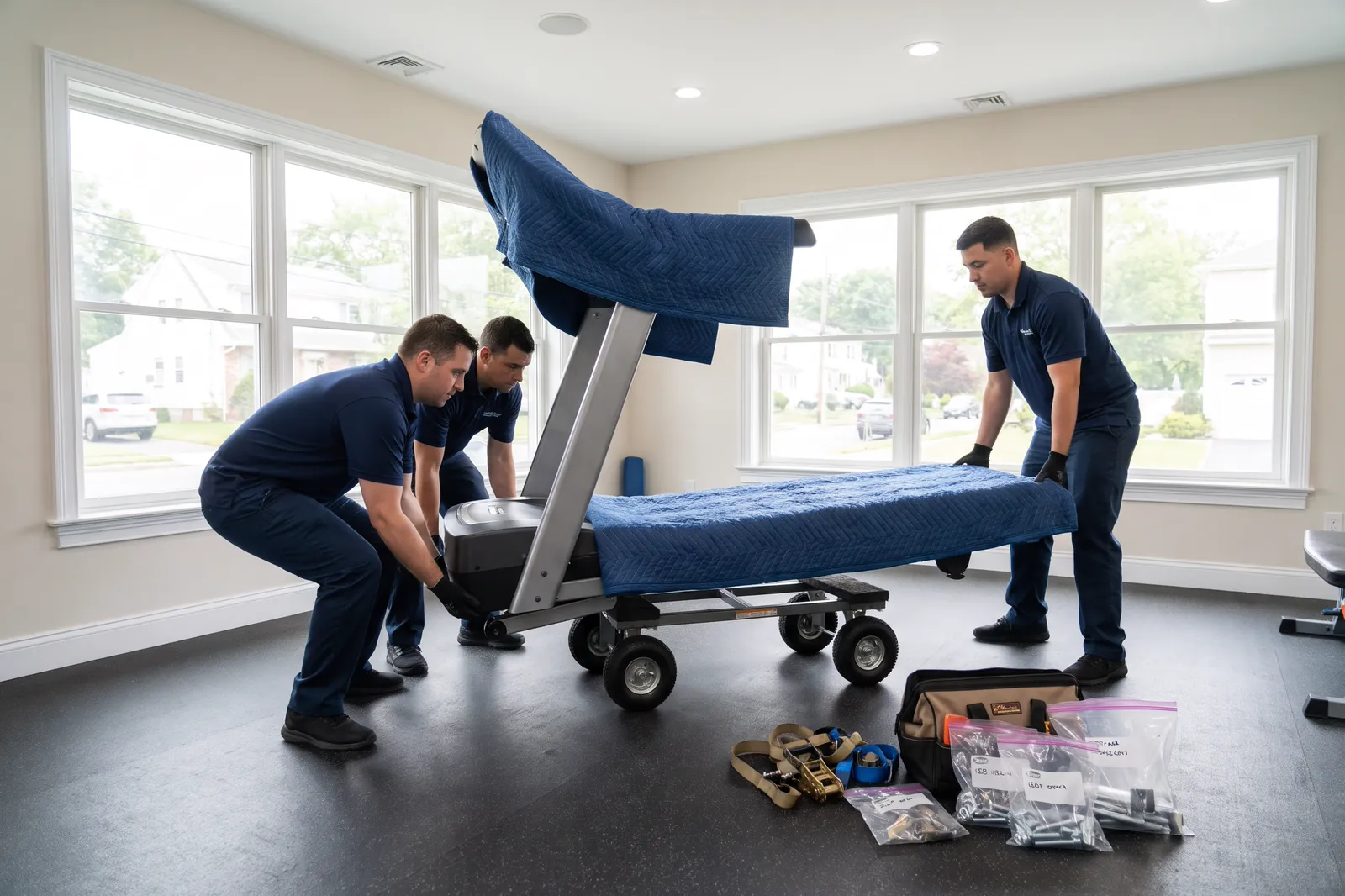
- Moving. A treadmill or elliptical can weigh several hundred pounds, and walk-ups, narrow stairs and freight elevator rules add time. Read why it pays to hire pro gym equipment movers.
- Disassembly and reassembly. Most large machines must be partly taken apart to move, then rebuilt, leveled and calibrated.
- Power. Many commercial treadmills need a dedicated 20-amp circuit, and some need a 208–240-volt outlet that most homes and apartments don’t have. Check the manual before you buy.
- A first service. Plan on at least cleaning, lubrication, belt adjustment and a safety check, plus any worn parts.
- No warranty. Most manufacturer warranties cover only the original purchaser, so assume a used machine is sold as-is.
A “free” machine follows the same math. See the true cost of a free treadmill.
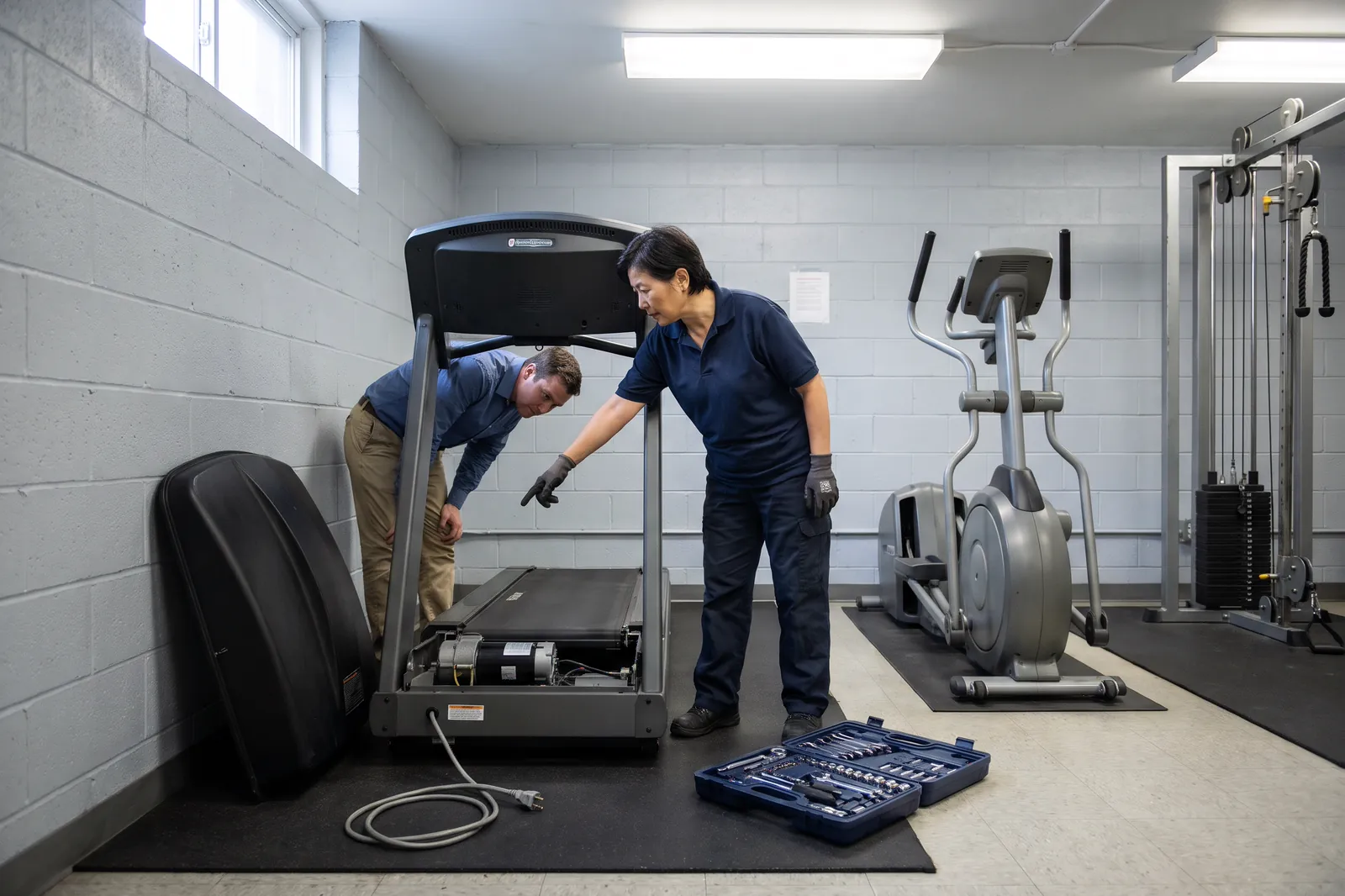
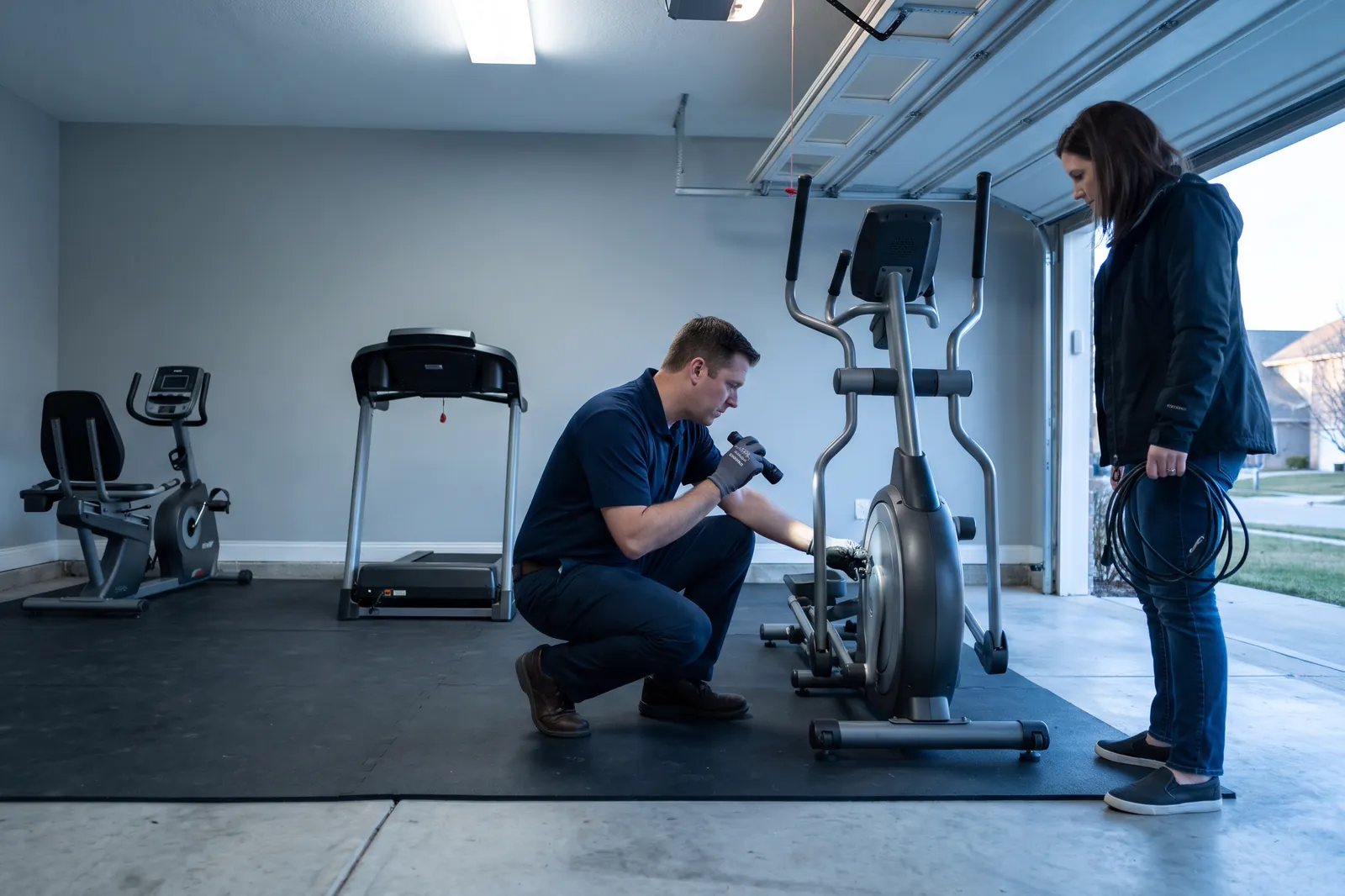
Not sure what you’re looking at? A certified technician can inspect a used treadmill, elliptical, bike or strength machine and tell you what it needs, before you buy if the seller agrees, or right after delivery while you can still raise problems with the seller. You get a written quote before any gym equipment repair starts.
Red flags: when to walk away
- The seller won’t let you plug it in or run it.
- There’s no model or serial number label, or it has been removed.
- Cracked welds, bent frame tubing or heavy rust on structural parts.
- A frayed or kinked cable that the seller says “still works.”
- A burning smell, sparks, or a motor that surges or stalls.
- Discontinued parts, or an open recall with no repair done.
When to call a technician
Call before you buy if the machine is expensive, motorized or commercial-grade and you can’t confidently test it yourself. Call after delivery if anything changed during the move: new noises, a belt that drifts, a console that won’t power up or resistance that feels different. Problems caught in the first days are easier to raise with the seller and usually cheaper to fix.
Technicians can also handle the rest: moving the machine, reassembly and installation, and a first tune-up so it starts its new life properly lubricated and adjusted. If the repair list keeps growing, read repair vs. replace before you commit.