Key takeaways
- Gym equipment is heavy, unbalanced and surprisingly fragile, which makes it far riskier to move than furniture.
- DIY moves commonly cause back injuries, crushed fingers, damaged floors and walls, and cracked consoles or pinched wiring.
- Incorrect reassembly can leave a machine unstable or unsafe, especially cable machines and treadmills.
- Professional movers bring the right equipment, insurance for building requirements, and the know-how to disassemble, reassemble and test.
- Dumbbells, bands and light folding equipment are usually fine to move yourself.
Whether you’re moving to a new home or just from the spare room to the basement, the home gym is often the hardest thing to move. What looks like a two-person job can quickly turn into an injury, a gouged floor or a machine that never works quite right again. Here’s why, and what professionals do differently.
Why gym equipment is harder to move than furniture
A sofa is heavy but balanced and padded. Gym equipment is the opposite:
- The weight is concentrated. On a treadmill most of it sits at the motor end; on an elliptical or spin bike it’s in the flywheel. That makes machines tip and swing unexpectedly.
- There are few safe handholds. Consoles, handrails and plastic covers look like handles but aren’t built to carry the machine’s weight.
- Some parts store energy. Folding treadmill decks use gas springs, and cable machines hold cables under tension.
- It’s fragile inside. Consoles, circuit boards, sensors and wiring harnesses don’t survive drops or knocks.
Risk 1: Injury
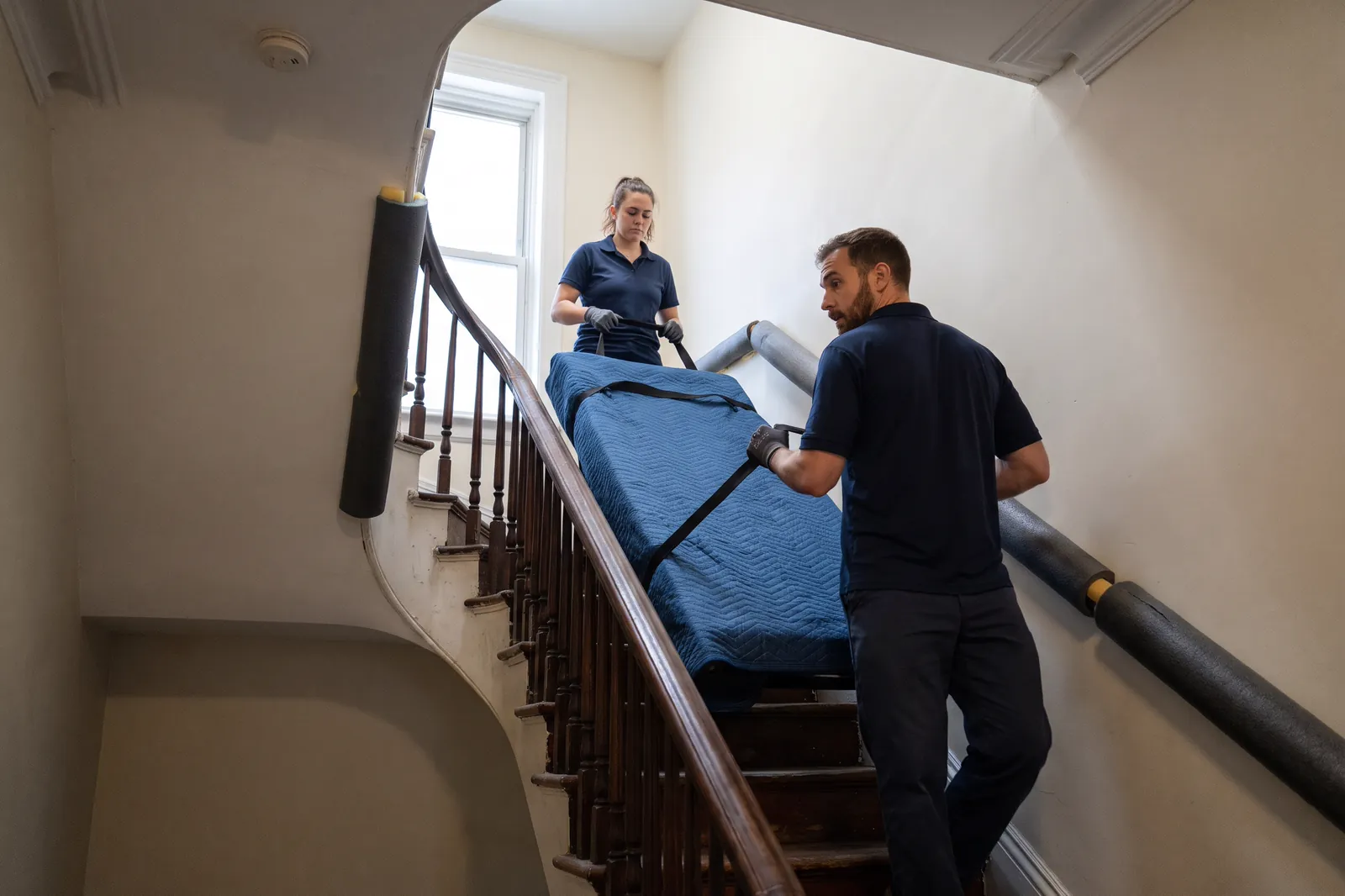
Lifting a few hundred pounds of unbalanced steel is how back strains, crushed fingers and broken toes happen. Stairs multiply the risk: the person below takes most of the load, and there’s nowhere to set the machine down. A folding treadmill that isn’t locked can spring open mid-carry, and an unsecured weight stack can drop. And it’s tempting to grab the console or handrails, which aren’t built to take the load.
Risk 2: Damage to your home and building
Pivoting a long, heavy machine around a tight corner is where walls, floors and door frames get hurt. Typical DIY damage includes scraped and dented walls, gouged hardwood, chipped door frames, cracked tiles and scuffed banisters. In apartment buildings, damage to hallways or elevator interiors can mean charges from the building, and many buildings won’t allow a move at all without a certificate of insurance from a moving company. The repair bill for any of this can exceed what professional movers would have cost.
Risk 3: Damage to the machine
Despite their weight, fitness machines are delicate where it matters. Common moving damage includes:
- Cracked consoles or displays from a knock or a tip-over.
- Pinched or unplugged wiring harnesses in treadmill uprights, which cause dead consoles and error codes.
- Knocked speed sensors, bent pedal arms or a frame twisted out of alignment.
- A treadmill belt or deck damaged by dragging, or a belt knocked off track.
- Condensation inside electronics when a cold machine is powered up too soon.
A single drop can lead to a repair bill that dwarfs the cost of the move.

Risk 4: Reassembly mistakes
Taking a machine apart is the easy half. Putting it back together correctly is where most DIY moves fail. Missing or mixed-up bolts, fasteners that aren’t fully tightened, a cable routed outside its pulley, a belt left out of alignment or a frame that rocks on an uneven floor can all leave a machine noisy, unreliable or unsafe. On cable machines a misrouted cable can jump its pulley and fray, and incorrect reassembly can complicate a warranty claim.
| Task | Typical DIY move | Professional movers |
|---|---|---|
| Planning | Measure on the day, hope it fits | Measure the route and plan disassembly in advance |
| Building rules | No certificate of insurance | Insured, with a COI provided when the building asks |
| Equipment | Furniture dolly, borrowed blankets | Lifting straps, heavy-duty dollies, pads and floor protection |
| Disassembly | Loose bolts in a bag | Photographed steps, labeled hardware and connectors |
| Afterward | Rebuilt from memory | Reassembled, leveled, calibrated and safety-tested |
What professional gym equipment movers do
- Survey and plan. Measure doors, stairs, elevators and turns, and decide how far each machine needs to come apart.
- Coordinate with the building. Book elevator time, follow move rules and provide insurance paperwork.
- Protect the route. Floor runners, wall and door-frame padding, and elevator pads.
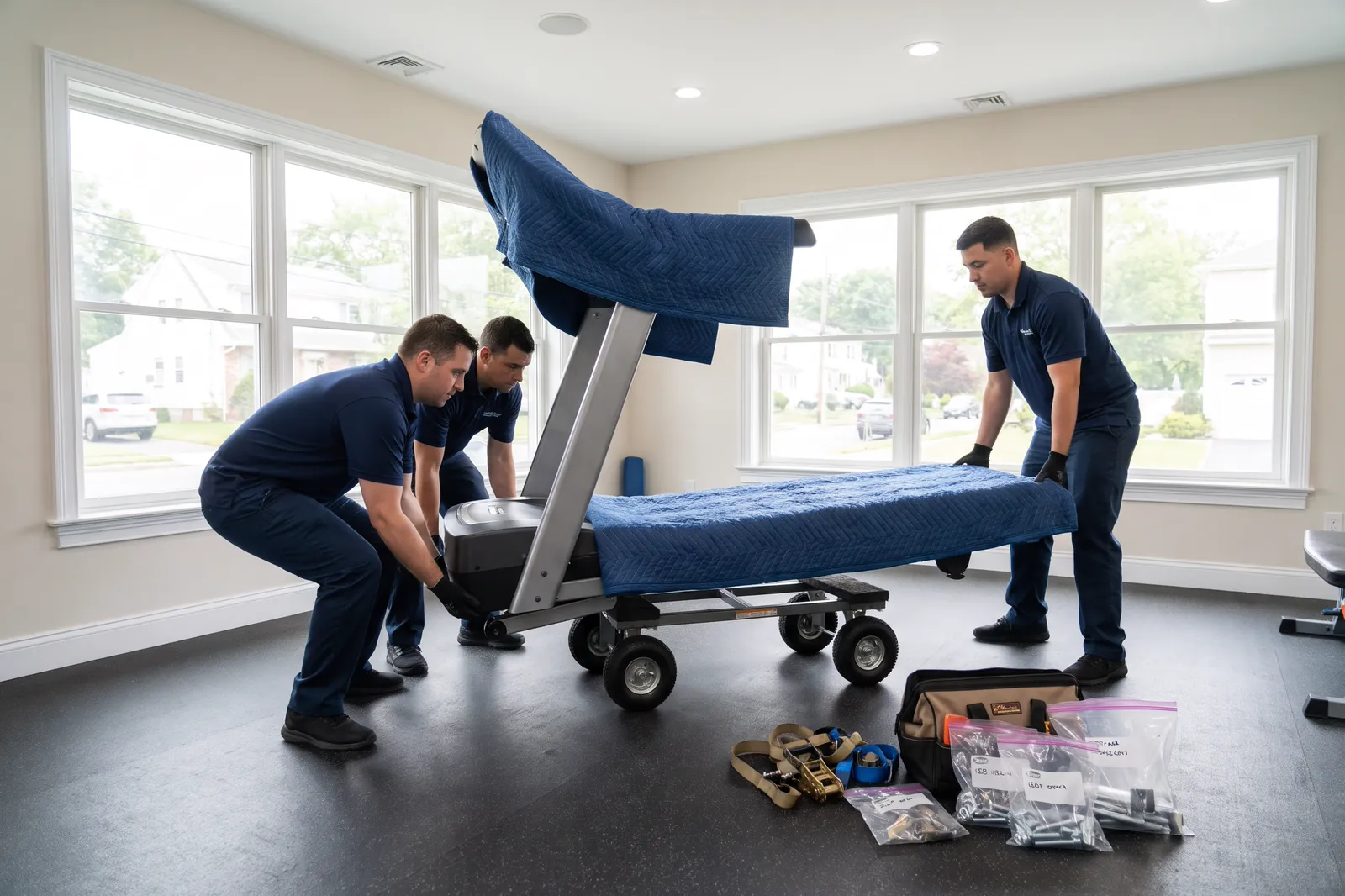
- Disassemble correctly. Secure weight stacks, release cable tension, disconnect and label wiring, and bag hardware by part.
- Move safely. Pad every piece, use straps and dollies sized for the load, and secure equipment upright in the truck.
- Reassemble and test. Rebuild to the manufacturer’s specifications, level the frame, recalibrate, and test the emergency stop and every function.
Moving a home or commercial gym? Professional gym equipment moving covers disassembly, padding, transport, reassembly and a full test by certified, licensed and insured technicians, across NYC, Long Island and Westchester. The quote is free and in writing before any work starts.
When a DIY move is reasonable
Not everything needs professionals. You can usually handle dumbbells and plates (in small, strong loads), bands, mats and suspension trainers, walking pads and light folding bikes with two people, and short moves of a machine across the same smooth floor on its own transport wheels. Unplug first, follow the manual and never lift by the console.
How to choose a gym equipment mover
Ask before you book:
- Are you insured, and can you provide a certificate of insurance for my building?
- Have you moved this type of machine before?
- Is disassembly, reassembly, leveling and testing included?
- Is the quote in writing, including stairs, elevator wait time and any other fees?
- What happens if something is damaged during the move?
When to call a pro
Call professionals for any motorized machine, anything with a weight stack or cables, anything that has to come apart to fit, any move involving stairs or a building that requires a COI, and any commercial gym, hotel or office fitness room move. If you’re moving within an apartment building, read how to move gym equipment in an NYC apartment building. And if a machine has already been moved and now acts up, on-site gym equipment repair can find what was knocked loose. For a fresh setup in the new space, see installation and assembly.