Key takeaways
- Call building management first: most co-ops and condos need advance notice, a freight elevator booking and a certificate of insurance from the movers.
- Measure the whole route, including the elevator cab, every door and every hallway turn, before moving day.
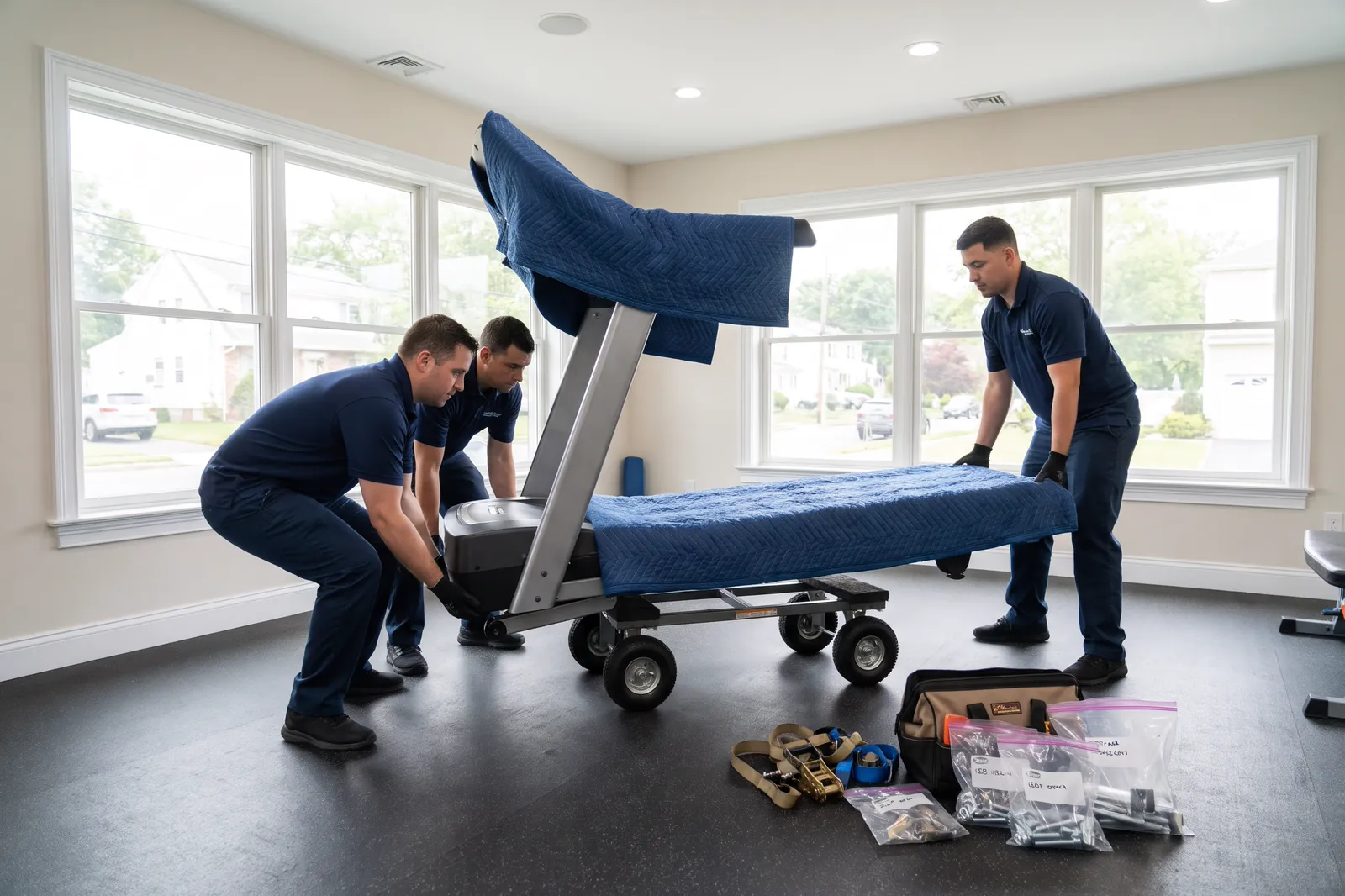
- Partly disassemble large machines before the move, and photograph and label every step.
- Protect floors, walls and elevator interiors; buildings may charge you for damage.
- After the move, reassemble, level and recalibrate before anyone uses the machine.
Moving gym equipment in or out of an NYC apartment building takes far more planning than a suburban move. Between building rules, freight elevator schedules, tight stairwells and heavy, awkward machines, a little preparation saves a lot of headaches on moving day.
Start with your building’s move policy
Before you book anything, call the super or managing agent at both buildings (or both apartments, if you’re moving within one building). Ask about:
- Notice and scheduling. Many co-ops and condos ask for 48 to 72 hours’ notice or more, and limit moves to set days and hours.
- Freight elevator booking. You may need to reserve a specific window, and the elevator may need wall pads installed.
- Certificate of insurance (COI). Many buildings require proof of insurance from the moving company, sometimes naming the building and managing agent, before they’ll confirm the move.
- Deposits and fees. Some buildings collect a move deposit and charge for damage to common areas.
Measure the whole route
Freight elevators vary widely across NYC buildings, and doors in older buildings are often narrower than you’d expect. Measure:
- The building entrance, any vestibule and the stoop or steps outside.
- The elevator door opening and the cab’s width, depth, height and diagonal.
- Every hallway turn between the elevator and your door.
- Your apartment door and any interior doors on the way to the room.
- Stair width, landings and the headroom at each turn in a walk-up.
Compare these with the machine’s largest piece after disassembly, not its assembled size.
Build a simple timeline
- Two weeks out: get both buildings’ move rules and COI requirements, measure the route and book movers.
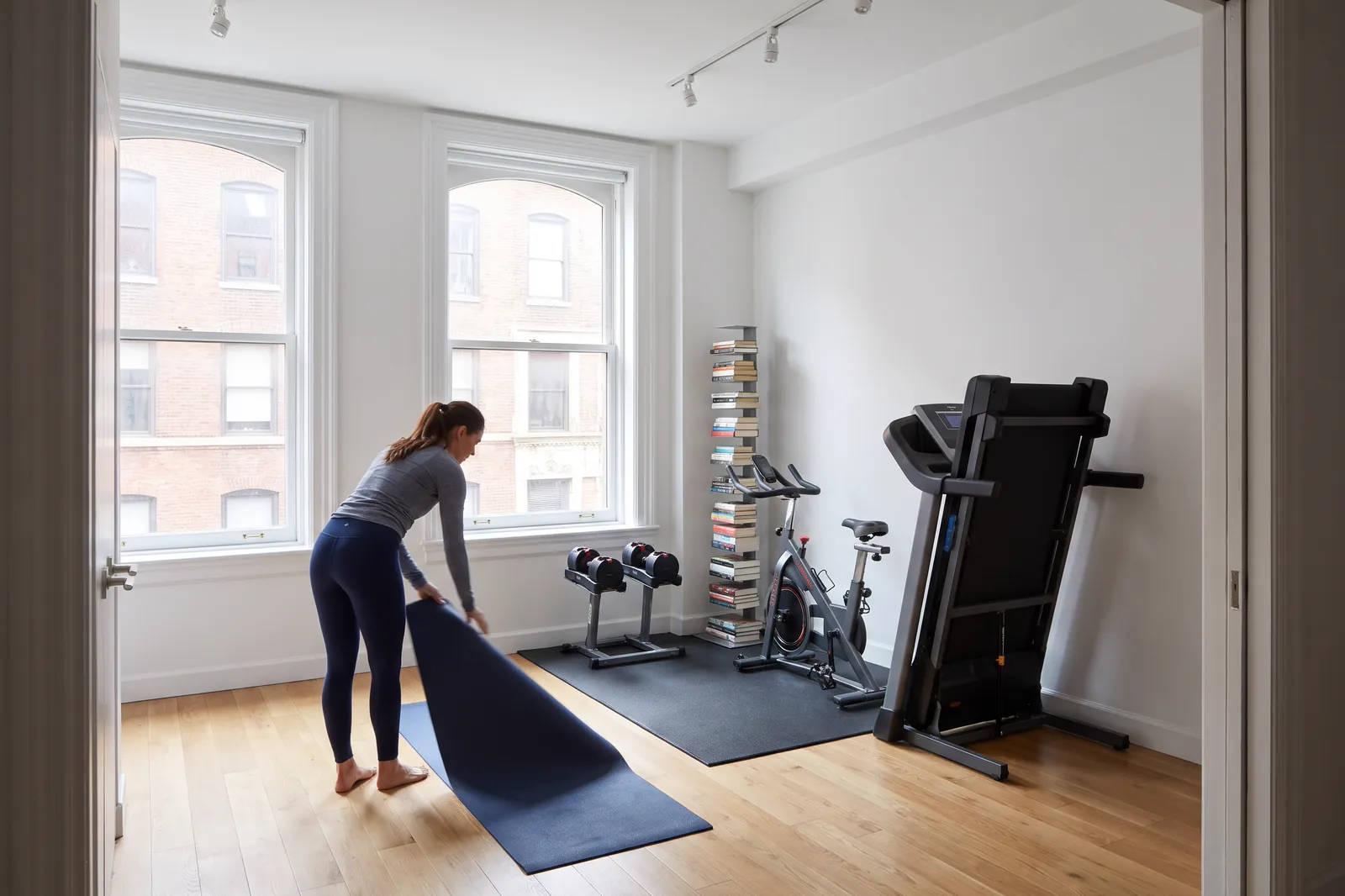
- One week out: confirm the freight elevator window, send the COI to building management, find the manuals and decide where each machine will go, near a grounded outlet and on a rubber mat.
- The day before: remove weight plates and attachments, take off small parts, and bag and label the hardware.
- Moving day: protect the route before the first piece moves, keep hallways clear and move the heaviest items while everyone is fresh.
- Afterward: reassemble, recalibrate and report any building damage promptly.
Prepare each machine
Every type of equipment has its own weak points. Check the owner’s manual for moving instructions, then use this as a guide.
| Equipment | Before the move | Watch out for |
|---|---|---|
| Treadmill | Unplug, remove the safety key, fold and lock or remove the console and uprights | Heavy motor end; a folding deck can spring open; never lift by the console or handrails |
| Elliptical | Remove handles, pedal arms or console as the manual allows | Weight concentrated at the flywheel end; long, awkward frame |
| Exercise or spin bike | Lower the seat and handlebars; secure loose parts | Heavy flywheel; transport wheels only work on smooth, flat floors |
| Rower | Separate the rail if designed to; ask whether a water tank should be drained | Water adds weight and can leak; keep the monitor protected |
| Cable or selectorized machine | Remove or secure the weight stack; release cable tension as the manual describes | Stacks are very heavy; cables under tension can whip |
| Rack, bench and plates | Remove plates and attachments; break uprights down; bag and label hardware | Plates and dumbbells should move separately in small, strong loads |
Disassemble before you get stuck
Taking the console mast off a treadmill or breaking a rack down into pieces often makes the difference between fitting through a door and getting stuck halfway. Do it in the apartment, not in the hallway with neighbors waiting.
- Photograph every step, including how wiring harnesses connect and how cables run through pulleys.
- Bag and label hardware by part, and tape each bag to its part.
- Don’t force anything. If a part won’t come off as the manual shows, stop and get help.
- Keep the manual with the hardware so reassembly is straightforward.
Protect floors, walls and elevators
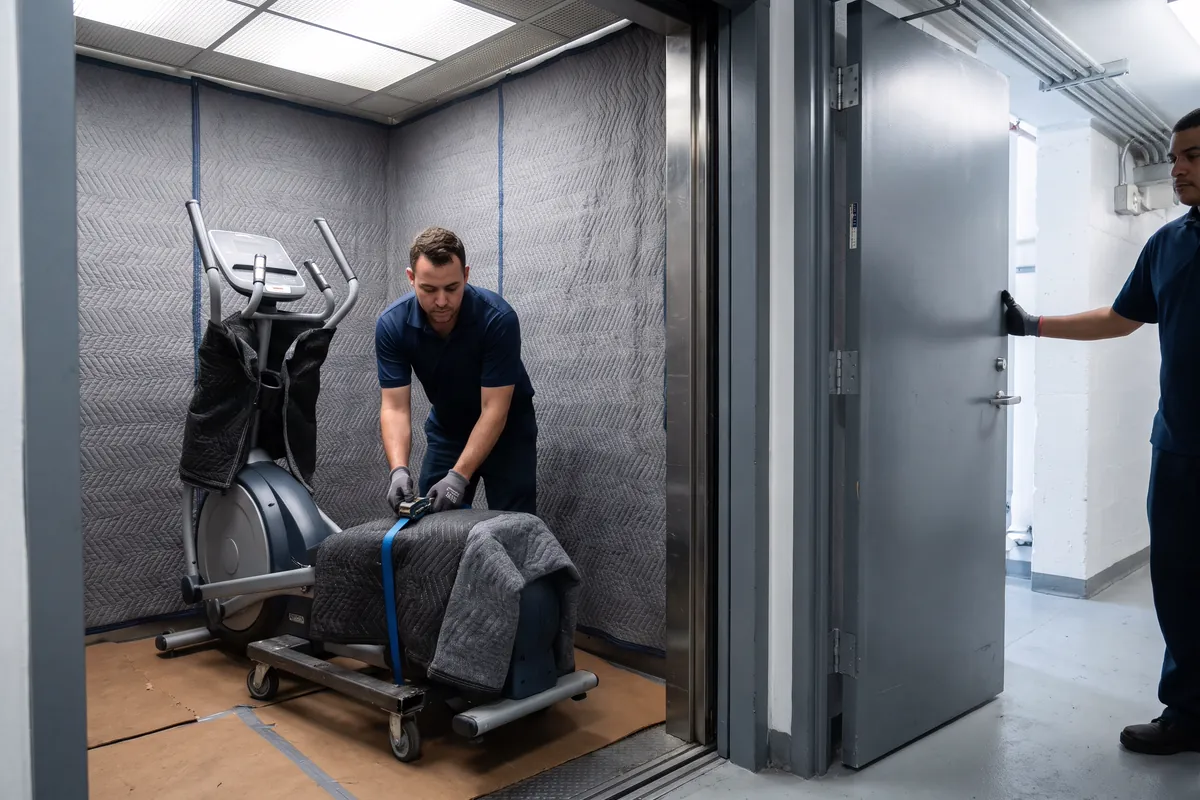
Many buildings require floor protection in hallways and elevators during a move, such as moving blankets, hardboard or heavy cardboard, and some charge for any damage without it. Do it even if it isn’t required. Equipment corners scuff walls, door frames and elevator interiors easily. Pad every machine, wrap consoles separately, and use corner guards at tight turns.
Walk-ups and stair-only moves
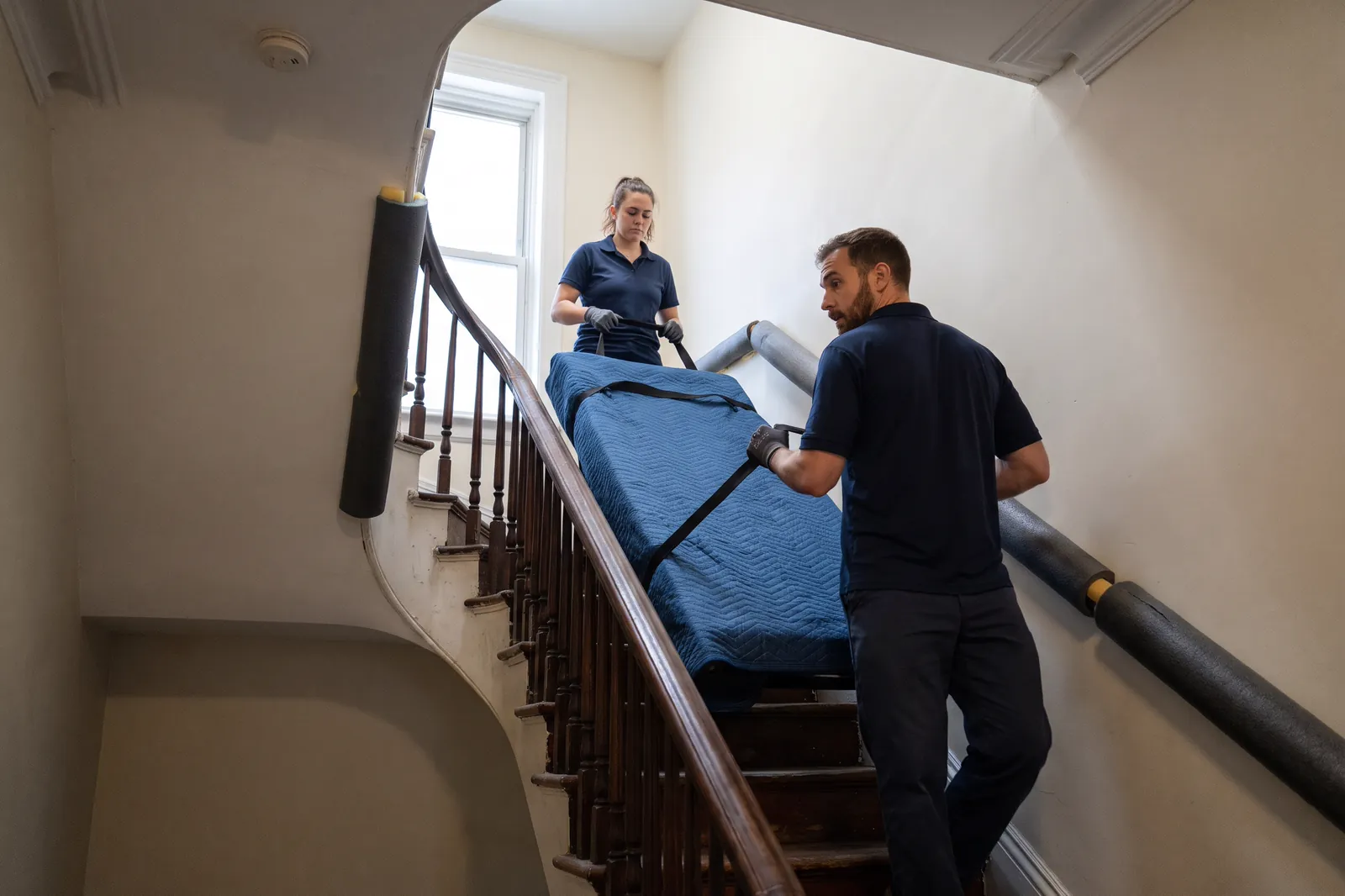
In walk-ups, common in older parts of Manhattan and Brooklyn, everything goes up or down the stairs by hand. A treadmill or loaded rack on a narrow staircase is genuinely dangerous: the weight sits at one end, there’s nowhere to set it down, and a slip can injure the people below. For anything heavy, hire movers with experience moving gym equipment. General movers may not have the right lifting straps, dollies or disassembly know-how. Here’s more on why hiring professional gym equipment movers pays off.
Planning an NYC equipment move? Professional gym equipment moving covers disassembly, padding, transport and reassembly by insured technicians who work with building rules and COI requests across Manhattan, Brooklyn, Queens and the rest of the city.
Reassembly and recalibration after the move
A rushed reassembly is a common cause of new noises or problems that weren’t there before. Once the equipment is in place:
- If it moved through the cold, let it reach room temperature before plugging it in, so condensation doesn’t damage the electronics.
- Reassemble in reverse order using your photos, tightening every bolt fully.
- Level the frame so it doesn’t rock, on a rubber mat if you’re on an upper floor.
- Check treadmill belt tension and tracking, incline, and resistance levels on bikes and ellipticals.
- Confirm cables sit correctly in every pulley and test the emergency stop and safety key before the first workout.
When to call a pro
Moving a set of dumbbells or a light folding bike yourself is fine. Call professionals when:
- The building requires a certificate of insurance.
- The route includes stairs, a stoop or a tight elevator.
- The machine is motorized, has a weight stack or must be taken apart to fit.
- After a move, the machine makes new noises, the belt drifts, or a console shows an error.
If something did get damaged along the way, on-site gym equipment repair can sort it out. Setting up in a smaller space? See the best gym equipment for small NYC apartments.