
Key takeaways
- Match the room to the equipment: finished basements suit most machines, garages need a plan for cold and humidity, and upper floors suit lighter equipment.
- Heavy racks and commercial machines put concentrated weight on upper floors; keep them near load-bearing walls or on a slab.
- Confirm the circuit before installation day, and plan Wi-Fi for connected equipment.
- Walk the delivery path: steep driveways, stone steps and narrow stairs in older homes are common obstacles.
- A good installation includes assembly to spec, leveling, anchoring where needed, calibration and a safety test.
Westchester homes often have great home gym potential: finished basements, attached garages and more square footage than city apartments. From Yonkers and New Rochelle to White Plains, Scarsdale and the hillside homes of northern Westchester, the same planning steps make the difference between a smooth installation day and a machine stuck on the stairs.
Match the room to the equipment
- Finished basements work well for most equipment and keep noise away from living spaces. Check ceiling height under ducts and beams for treadmills, ellipticals and racks. Walk-out basements, common on sloped lots, make delivery much easier.
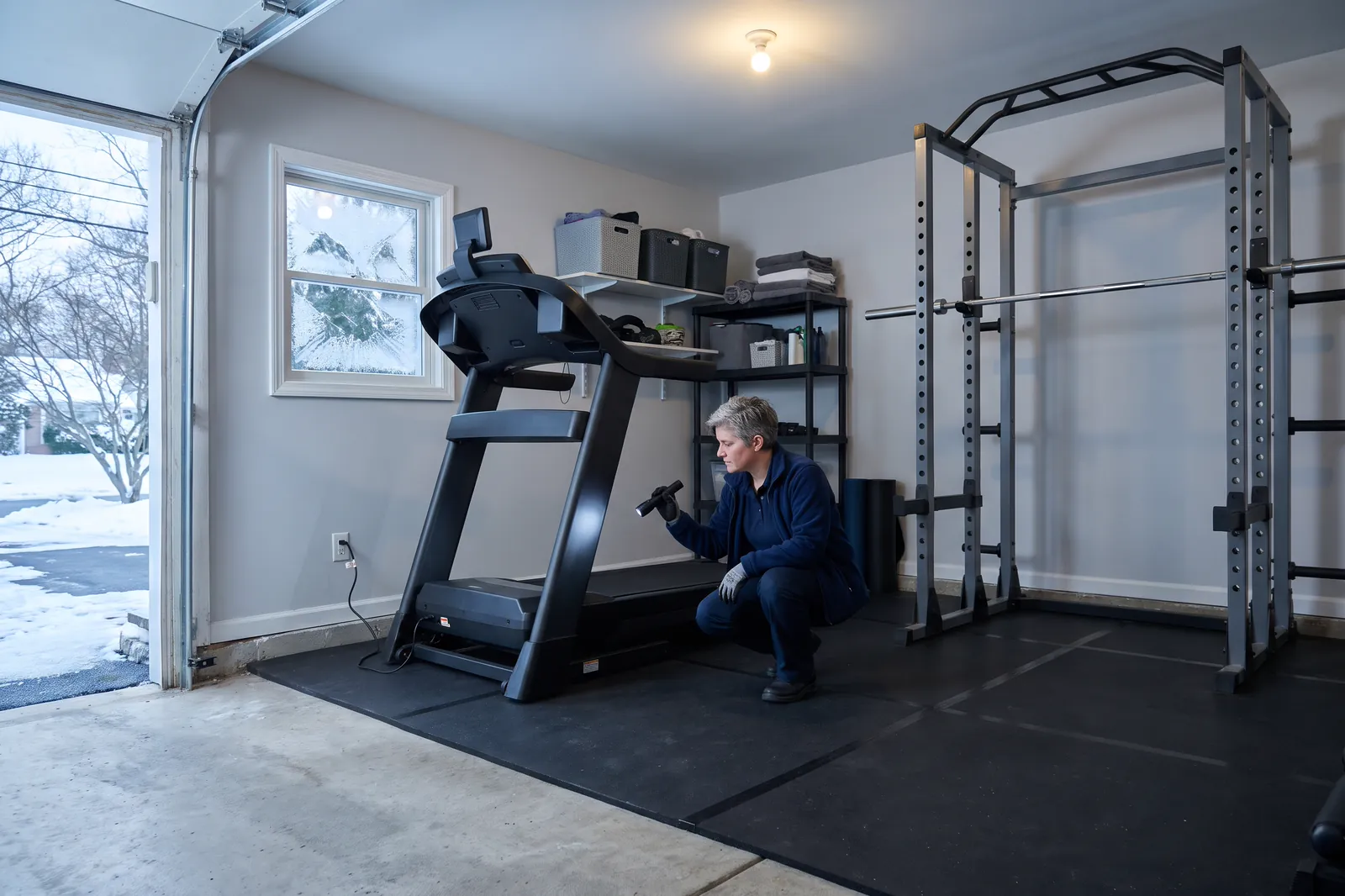
- Garages offer the most floor space and the easiest access, but cold winters and humid summers are hard on electronics. See these winter gym equipment care tips.
- Spare bedrooms and bonus rooms work for bikes, rowers and compact ellipticals, but rarely suit a loaded power rack or a heavy commercial treadmill.
Check floor loading, especially upstairs
A basement slab or garage floor can carry almost any home gym. Upper floors are different: they’re built for people and furniture spread around a room, not for a loaded rack, a stack of plates or a commercial machine concentrated in one spot. Keep heavier equipment near load-bearing walls rather than mid-room, spread the load with rubber flooring, and avoid stacking plates in one corner. For very heavy setups on an upper floor, ask a structural engineer before installation.
Plan electrical circuits and Wi-Fi in advance
Many older Westchester homes have electrical panels that predate modern home gyms. If you’re installing a treadmill, a connected bike and a sound system in one room, confirm the circuit can handle the combined load before installation day; tripping breakers mid-workout gets old fast. Check each machine’s manual for its circuit requirement, plan outlets so cords don’t cross walkways, and use a licensed electrician for any new circuit. Garages and unfinished basements usually need GFCI protection under code.
Connected equipment needs a solid Wi-Fi signal, and basements are often dead zones. Test the signal where the machine will stand, and add an access point or mesh node before the installer arrives so setup can be finished the same visit.
Walk the delivery path
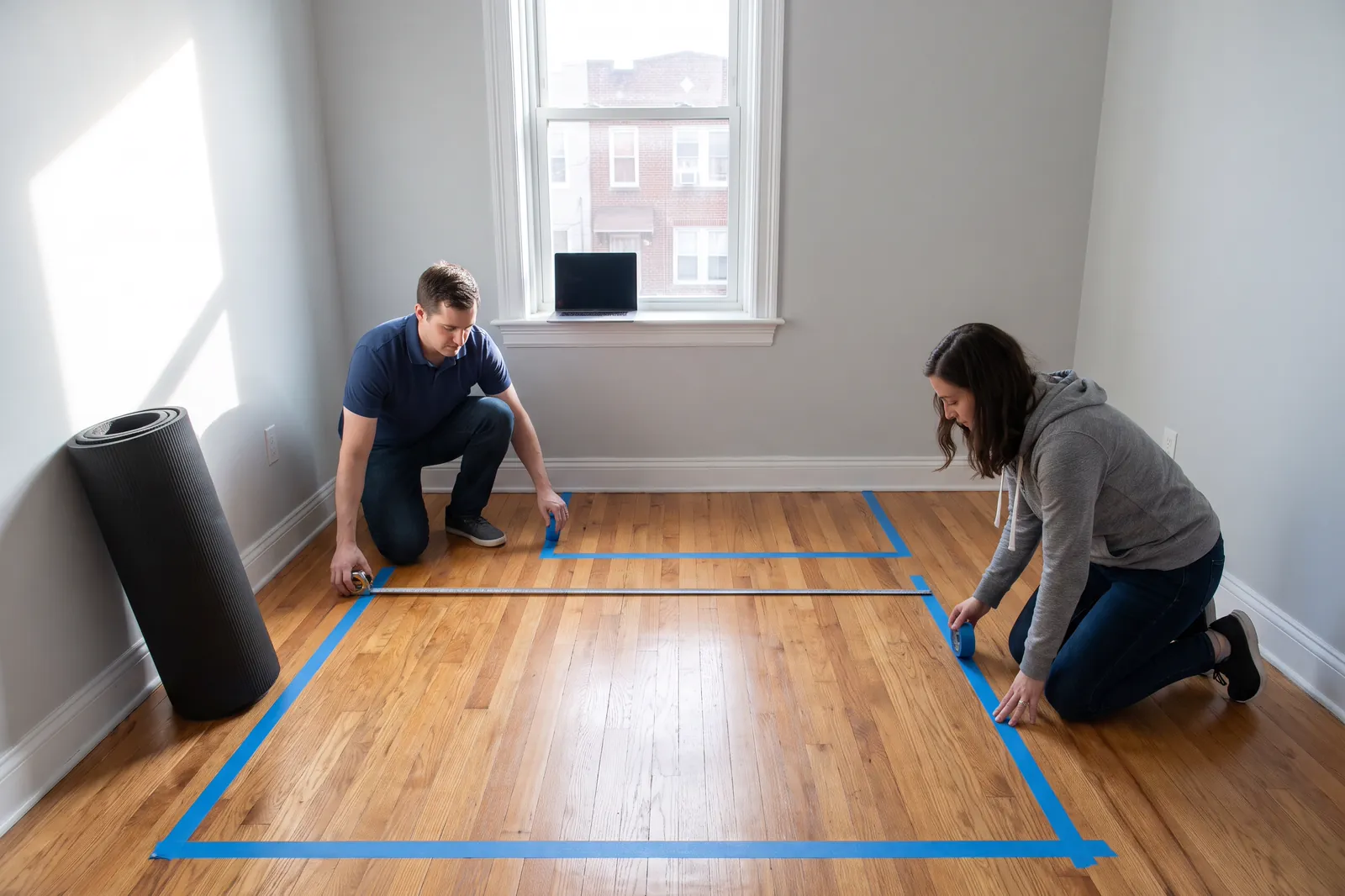
Westchester’s hills and older housing stock create their own delivery challenges: steep driveways, stone steps, narrow stairs in Tudors and older colonials, and basement stairs with tight turns and low headroom. Measure every door, stair width, landing and turn on the way in, and compare them with the box or the machine’s largest piece. Some machines can be assembled only in the room, so make sure the boxed parts will fit, too.

| When | What to do |
|---|---|
| 2–3 weeks before | Choose the room, measure the space and delivery path, check the ceiling and the circuit |
| 1–2 weeks before | Confirm the delivery type (curbside, in-home or room of choice), book an electrician if needed, order rubber flooring |
| The day before | Clear the room and path, lay flooring, plan for kids and pets, note the Wi-Fi password |
| Installation day | Confirm exact placement before assembly starts; keep manuals and hardware lists handy |
| First month | Recheck bolts and, on treadmills, belt tension and tracking after the break-in period |
What a good installation day looks like
Whoever assembles your equipment, the job should cover more than bolting parts together:
- Unpack and inventory. Check every part and hardware bag against the manual before assembly starts, and look for shipping damage.
- Assemble to spec. Bolts tightened in the right order and to the right torque, cables routed exactly as designed, wiring connectors fully seated.
- Level and anchor. Leveling feet set so the frame doesn’t rock; racks anchored to the floor where the manufacturer calls for it.
- Calibrate. Treadmill belt tension and tracking, incline calibration, and resistance checks on bikes and ellipticals.
- Safety test. Emergency stop and safety key, selector pins on weight stacks, and a full run at every speed and level.
- Walkthrough. How to use it safely, what simple care to do, and when to call for service.
Ask in advance whether packaging removal is included, and keep the manuals: you’ll need model and serial numbers for warranty claims.
Installing a home gym in Westchester? Certified, licensed and insured technicians handle home gym installation and assembly across Westchester County: assembly, leveling, anchoring, calibration and a full safety test, with a written quote before work starts.
Think about sound and vibration
A treadmill or dropped weights below a bedroom, or along a shared wall in a townhouse or condo, can carry through the whole building. Rubber flooring absorbs much of the impact; for heavy lifting, a thicker lifting platform helps more. Plan this before installation, not after. Moving a fully assembled machine to fit flooring underneath is a bigger job than doing it first.
Leave room to grow
If you’re starting with a treadmill and dumbbells, leave clearance for a rack, bike or bench later. Plan electrical, flooring and lighting for the room’s full potential now, and keep about 2 feet around cardio machines and 6½ feet behind a treadmill so you’re not rearranging everything when you add a piece. Buying equipment for that next phase? The home gym setup checklist covers flooring, ceilings and humidity in more detail.
When to call a technician
Some installation jobs are worth handing off from the start:
- Power racks that need anchoring, and cable machines or functional trainers where cable routing is safety-critical.
- Treadmills and ellipticals going down basement stairs or up to a second floor.
- Connected equipment with wiring harnesses, consoles and calibration steps.
- A DIY assembly that wobbles, squeaks, clunks or shows an error code.
- A treadmill belt that drifts or slips after the first few weeks.
For problems that show up later, on-site gym equipment repair covers all major brands. Planning to relocate equipment within the house or to a new home? See gym equipment moving.