Key takeaways
- Let equipment that has been sitting in the cold warm up before you switch it on, and start at a low speed.
- Condensation is the hidden risk: moisture forms on cold metal and electronics when warm, humid air reaches them.
- Keep machines away from radiators and space heaters, and never share a treadmill's outlet with a heater.
- Salt and grit are corrosive and abrasive. Use entry mats, ask for clean indoor shoes and wipe frames more often.
How winter affects gym equipment
Most gym equipment is designed for an ordinary indoor room. A New York winter pushes it out of that comfort zone in several directions at once. In unheated garages and basements, cold stiffens belts and thickens lubricants. In apartments, steam heat dries the air and can bake anything parked next to a radiator. In building gyms near the lobby, boots bring in road salt and slush. And because fewer people run or ride outdoors, home and building machines often get more use in winter than at any other time of year.
| Where it lives | Main winter risk | What to do |
|---|---|---|
| Garage (common in Long Island, Westchester and Staten Island houses) | Freezing temperatures, condensation, rust | Warm the space before use, let the machine warm up, use a breathable cover, keep it off bare concrete |
| Unheated basement or storage room | Damp, cold air and condensation | Run a dehumidifier, keep equipment on mats, check bolts for rust |
| Apartment next to a radiator | Dry heat that cracks belts, upholstery and plastics | Move the machine away from the radiator and consider a humidifier |
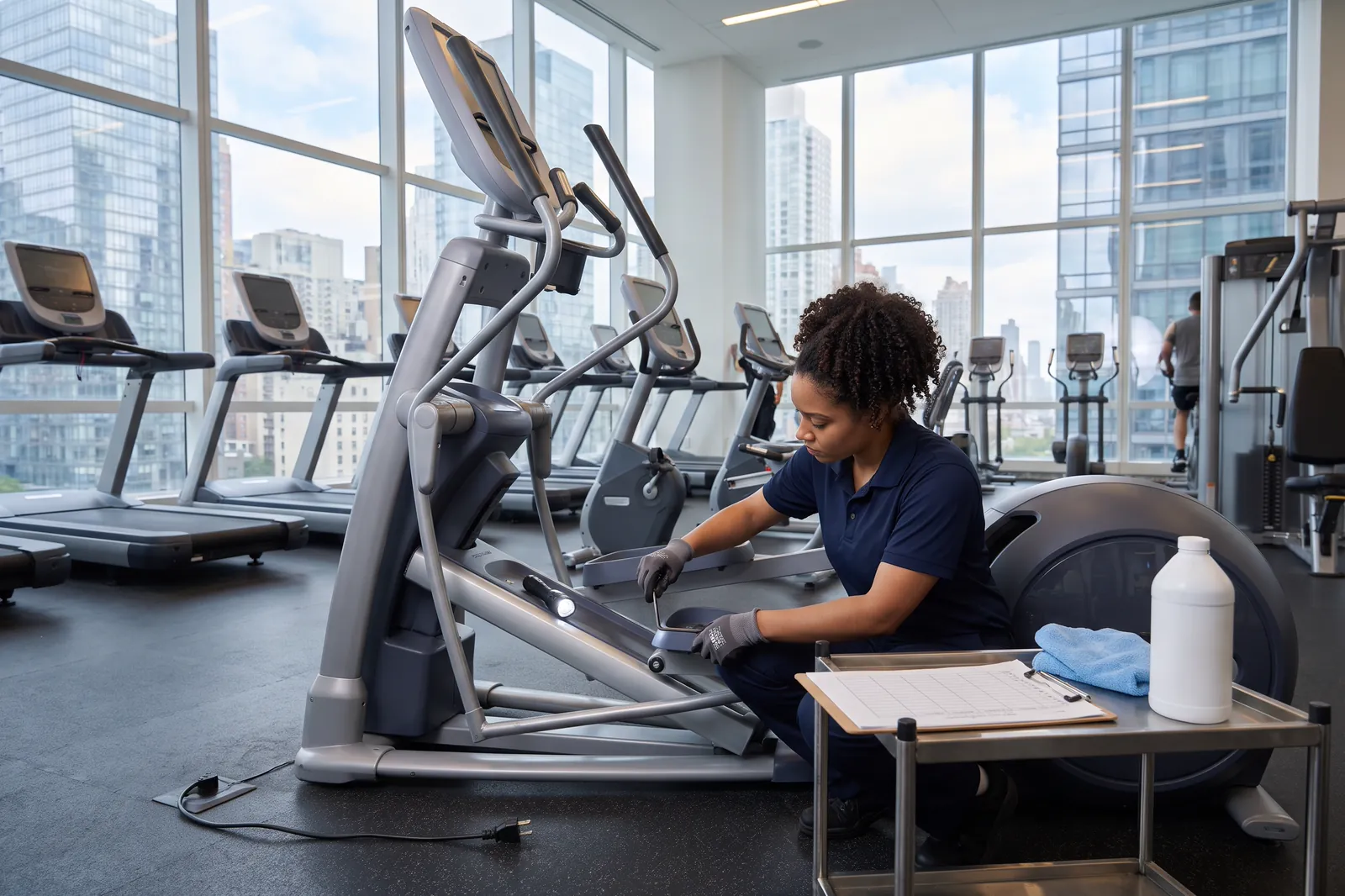
| Building gym near the lobby or a side entrance | Salt, grit and slush tracked in on boots | Entry mats, an indoor-shoes rule, daily mopping, frequent wipe-downs |
| Any home gym | More use than usual | Check belts and lubrication more often |
Garages, basements and unheated rooms
Cold affects equipment in predictable ways. Lubricants thicken, so motors work harder at startup. Running belts and drive belts stiffen. Plastic shrouds and console housings get more brittle and can crack if bumped. Displays may respond slowly, and batteries in self-powered consoles drain faster.
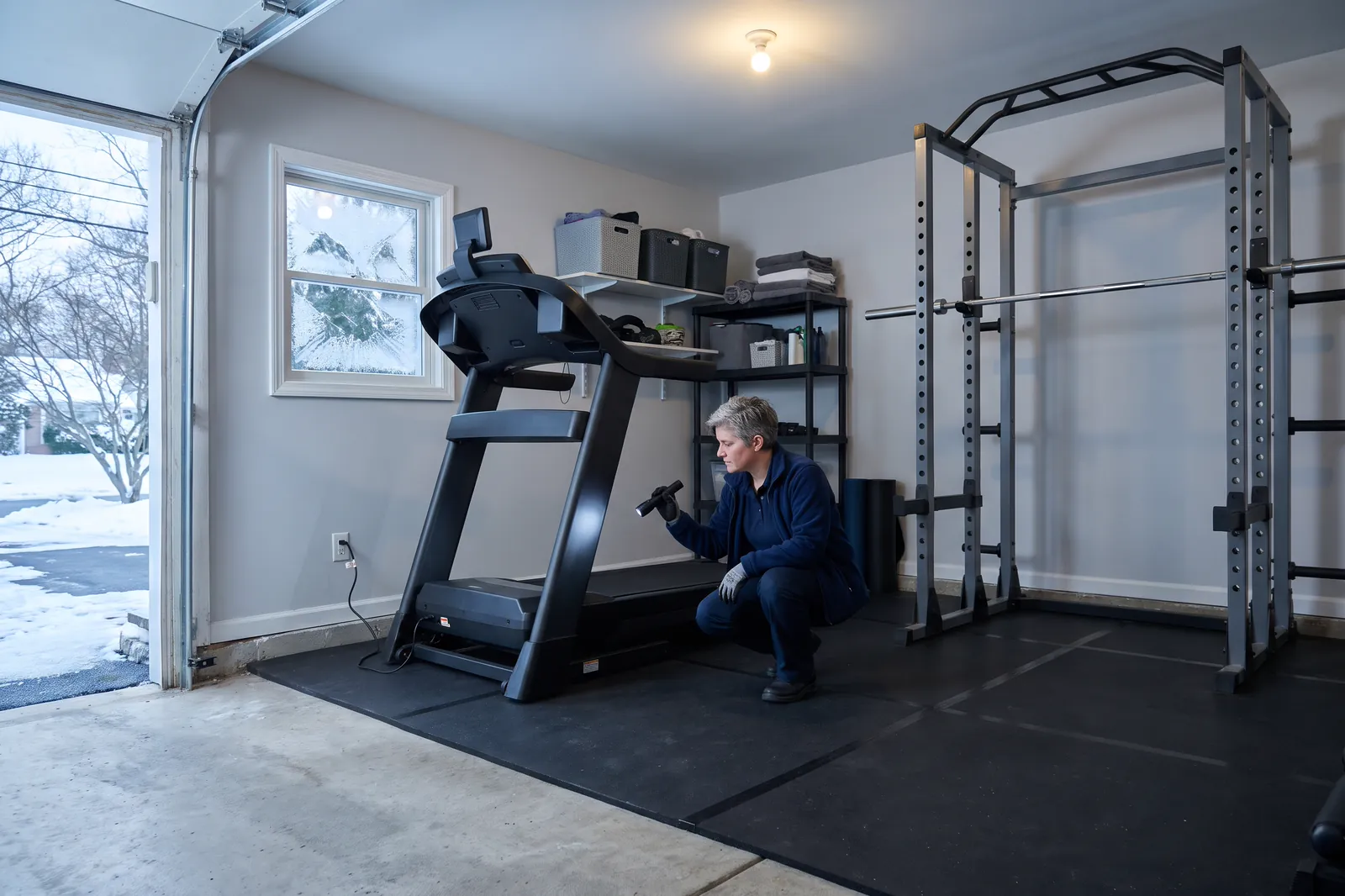
Check your owner's manual for the operating and storage temperature range; many machines aren't designed to be used, or even stored, in freezing conditions. If yours lives in a cold space:
- Warm the room before you train, then give the machine time to reach room temperature before switching it on.
- Start slowly: walk at a low speed or pedal gently for the first few minutes.
- Keep the machine off bare concrete. A rubber mat blocks cold and moisture from below.
- Use a breathable cover, not a plastic tarp, which traps moisture against the frame.
- Never run a fuel-burning heater in a closed garage, and keep any electric heater well away from equipment and mats.
Electrical safety matters more in winter. Don't plug a space heater into the same outlet or circuit as a treadmill, don't use extension cords for either, and use the grounded outlet the treadmill's manual calls for.
Condensation: the hidden winter risk
Condensation forms when warm, moist air meets a cold surface, the same way a cold glass sweats in summer. In winter it happens when you heat a cold garage quickly, open the door from a warm house, or move a machine from a cold space into a warm one. Moisture can settle on the frame, fasteners, motor and the circuit boards inside the console and motor compartment.
- Warm cold spaces gradually instead of pointing a heater at the machine.
- If you see moisture on the frame, console or around the motor hood, don't switch the machine on. Unplug it, wipe what you can reach and let it dry.
- Watch for rust spots on bolts, welds and the frame, a sign that condensation is happening regularly.
- If a machine has to move between cold and warm spaces, give it several hours to adjust before powering it up.
Radiators, steam heat and dry air
Many NYC apartments are heated by steam radiators that get very hot and can't always be turned down. Equipment parked against a radiator or heating vent is exposed to heat that dries out belts, upholstery and plastic parts and can warp console housings. Keep machines a few feet away and never touching a radiator, don't let them block the heat, and follow any clearance your manual specifies.
Steam heat also drops indoor humidity. Very dry air speeds up how fast belts and rubber parts dry out and builds up static electricity, which can cause occasional console glitches. A humidifier helps; many people aim for roughly 30 to 50 percent indoor humidity. Keep the humidifier a few feet from the equipment so mist doesn't settle on the electronics.
Salt, slush and grit in building gyms
Road salt and ice-melt products corrode steel, and the grit that comes with them acts like sandpaper. In a condo, co-op or rental building gym near the lobby, boots carry both straight onto the floor, and from there onto treadmill belts, pedals and frames. Melted slush near power cords is an electrical hazard, too.

- Put a large entry mat inside the gym door, and clean or swap it often.
- Ask residents to change into clean indoor shoes, with a sign and a bench by the door.
- Mop daily during snowy weeks, including under and around machines.
- Wipe frames, feet and leveling pads, where salt collects and rust starts.
- Keep cords off wet floors and away from the entrance.
Grit on a treadmill belt wears both the belt and the deck underneath. If a belt starts to feel rough or noisy after a snowy stretch, have it checked before the wear spreads. For building staff, the monthly gym equipment safety checklist is a good moment to look for rust and wet floors.
Adjust your maintenance for winter use
November through March is when home equipment often jumps from a few sessions a week to daily use. Adjust the routine to match:
- Check treadmill belt lubrication monthly instead of quarterly, using only the product your manual specifies. Dry air and extra miles both shorten the interval; the treadmill belt lubrication guide shows how.
- Vacuum under machines more often, because heating systems circulate more dust.
- Wipe down frames more often if usage has gone up.
- Unplug equipment during winter storms and power outages so it isn't hit by a surge when power returns.
- Book a seasonal service before your busiest weeks if the last professional check was a while ago.
For the full calendar, see the gym equipment maintenance schedule and how often to service gym equipment.
Get ahead of winter wear. A seasonal check-up catches dry belts, rust and loose hardware before heavier winter use turns them into repairs. Ask about a preventive maintenance visit for your home, garage or building gym.
When to call a technician
- Moisture inside the console or motor compartment, or a machine that got wet and won't start
- A treadmill that hesitates, slips or strains at startup even after warming up
- Error codes that keep returning, or a console that resets on its own
- Rust on cables, pulleys, welds or structural bolts
- Cracked plastic shrouds or housings near moving parts
- A breaker that trips when the machine starts
Unplug the machine and request treadmill repair or gym equipment repair. Certified, licensed and insured technicians work in apartments, building gyms and garages across NYC, Long Island and Westchester, and you get a written quote before any work starts.