Key takeaways
- Focus on what hurts people: emergency stops and safety keys, cables and pins, rack hardware, floors and power cords.
- Use the same checklist every month, then sign and date it. The record matters almost as much as the check.
- Anything that fails comes out of service immediately: tag it and disable it instead of keeping an eye on it.
- Visual checks don't replace a technician's inspection of internal, electrical and structural parts.
Before you start
Pick a quiet time, ideally before opening or during the slowest hour, and bring:
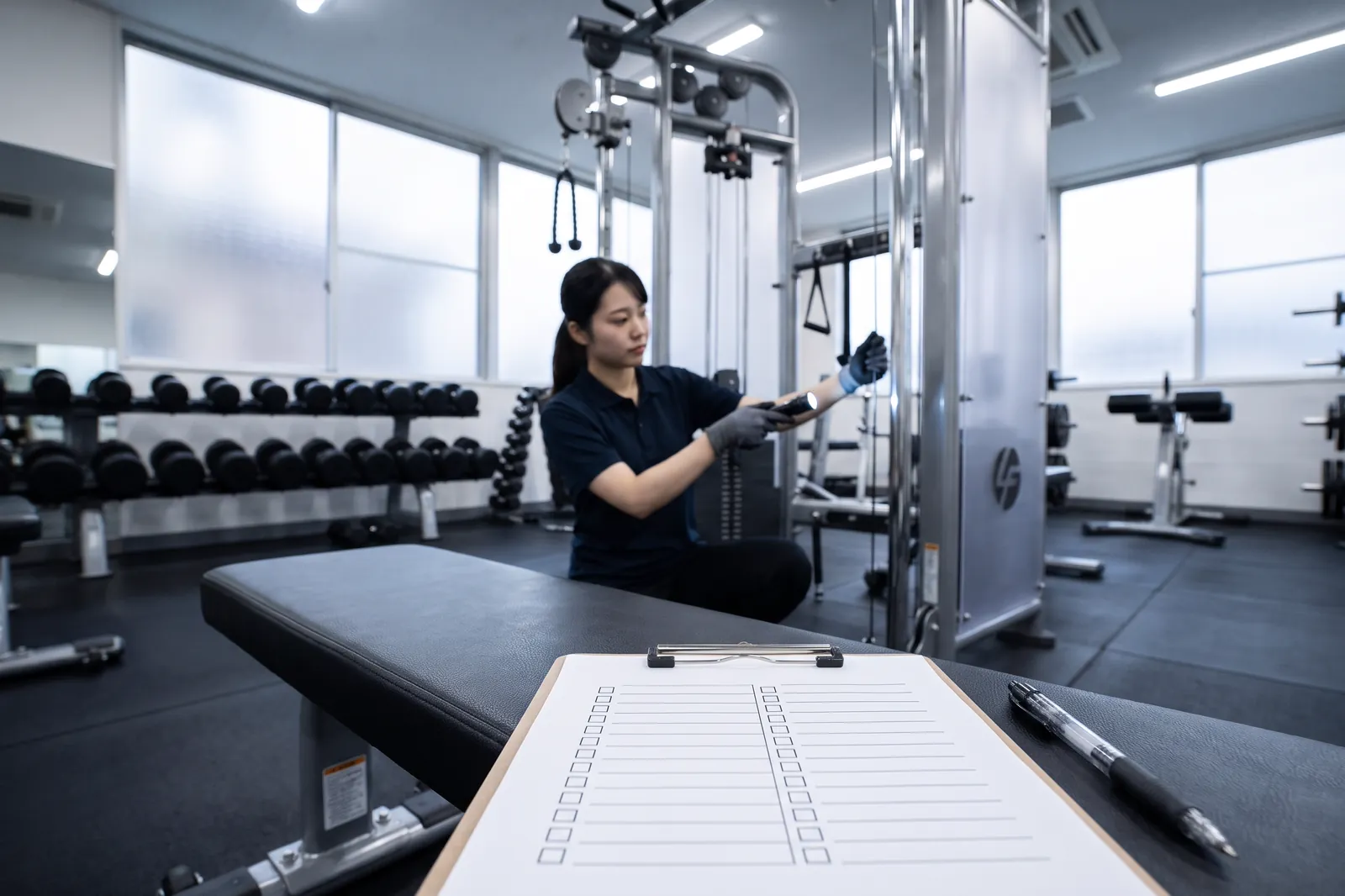
- This checklist, printed, and a pen
- A flashlight for looking at cables and pulleys
- Out-of-order signs and tape
- A phone to photograph problems and serial-number labels
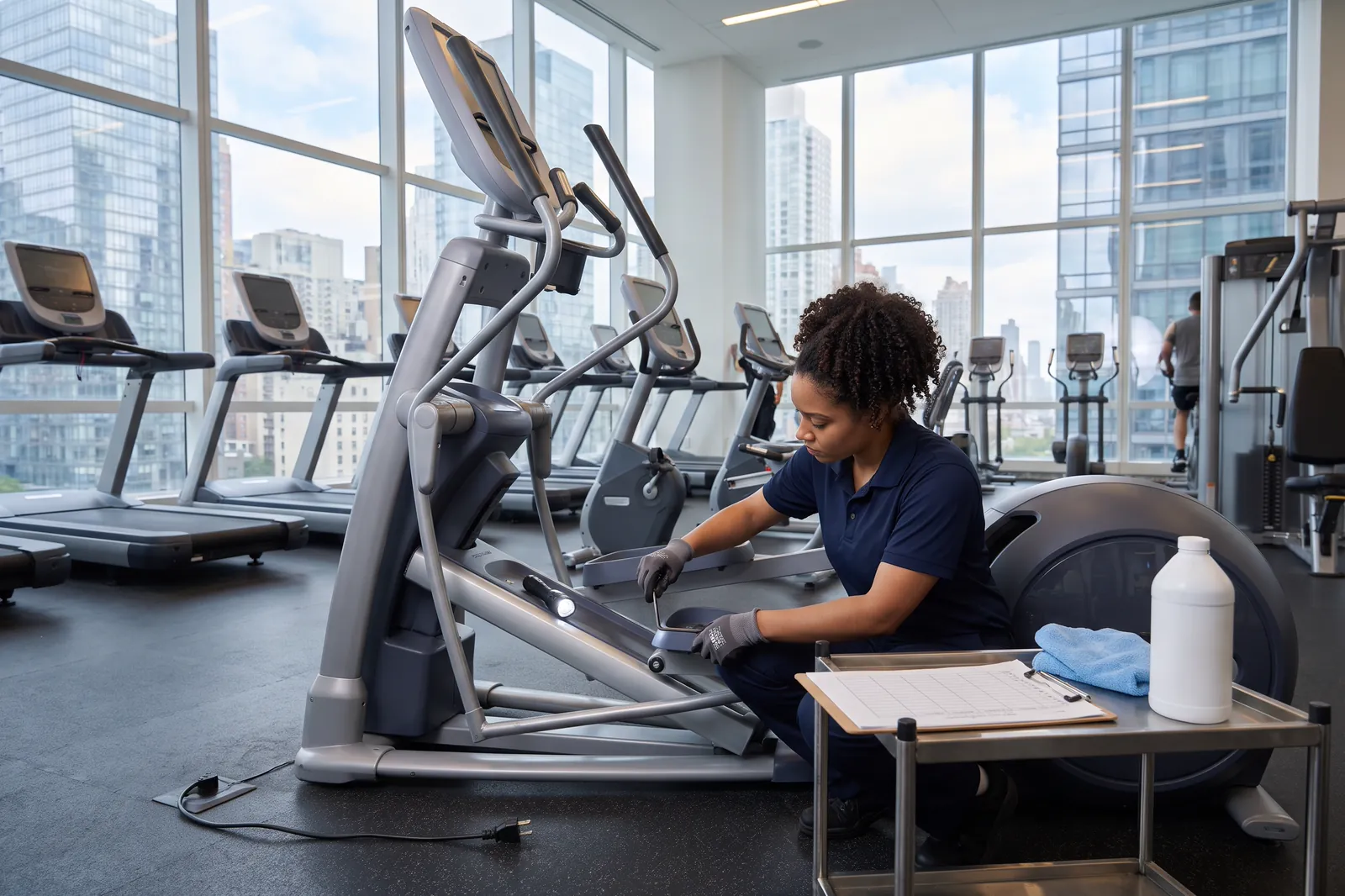
Do the checks with nobody using the machines. Keep your hands away from moving belts, pulleys and flywheels, and leave covers and shrouds on: this is a look-and-touch inspection from the outside. In a home gym the same list works; it just takes less time.
Walk the room in the same order every month (cardio, then strength, then free weights, then floors and power) so nothing gets skipped. In a facility, give each machine a number on the checklist and a small label with the same number on its frame, so results line up month to month and anyone can tell which treadmill failed.
Cardio equipment checks
| Check | How to check | Take it out of service if |
|---|---|---|
| Emergency stop and safety key | With nobody on the belt, start the treadmill at its lowest speed while standing beside it, then pull the safety key or press the stop | The belt doesn't stop promptly, or the key or clip is missing |
| Running belt | Look along both edges and the surface, then walk on it at low speed | Edges are frayed or torn, or the belt slips or jerks |
| Handrails, handles and console | Push and pull each one firmly | Anything moves, cracks or rattles |
| Pedals, cranks and straps | Wiggle each pedal and crank arm by hand | There's play, a cracked pedal or a broken strap |
| Indoor cycling bike brake | Press the emergency brake while the flywheel spins | The flywheel doesn't stop |
| Power cord and plug | Follow the cord from the machine to the outlet | The cord is cut, crushed or scorched, or the plug feels hot |
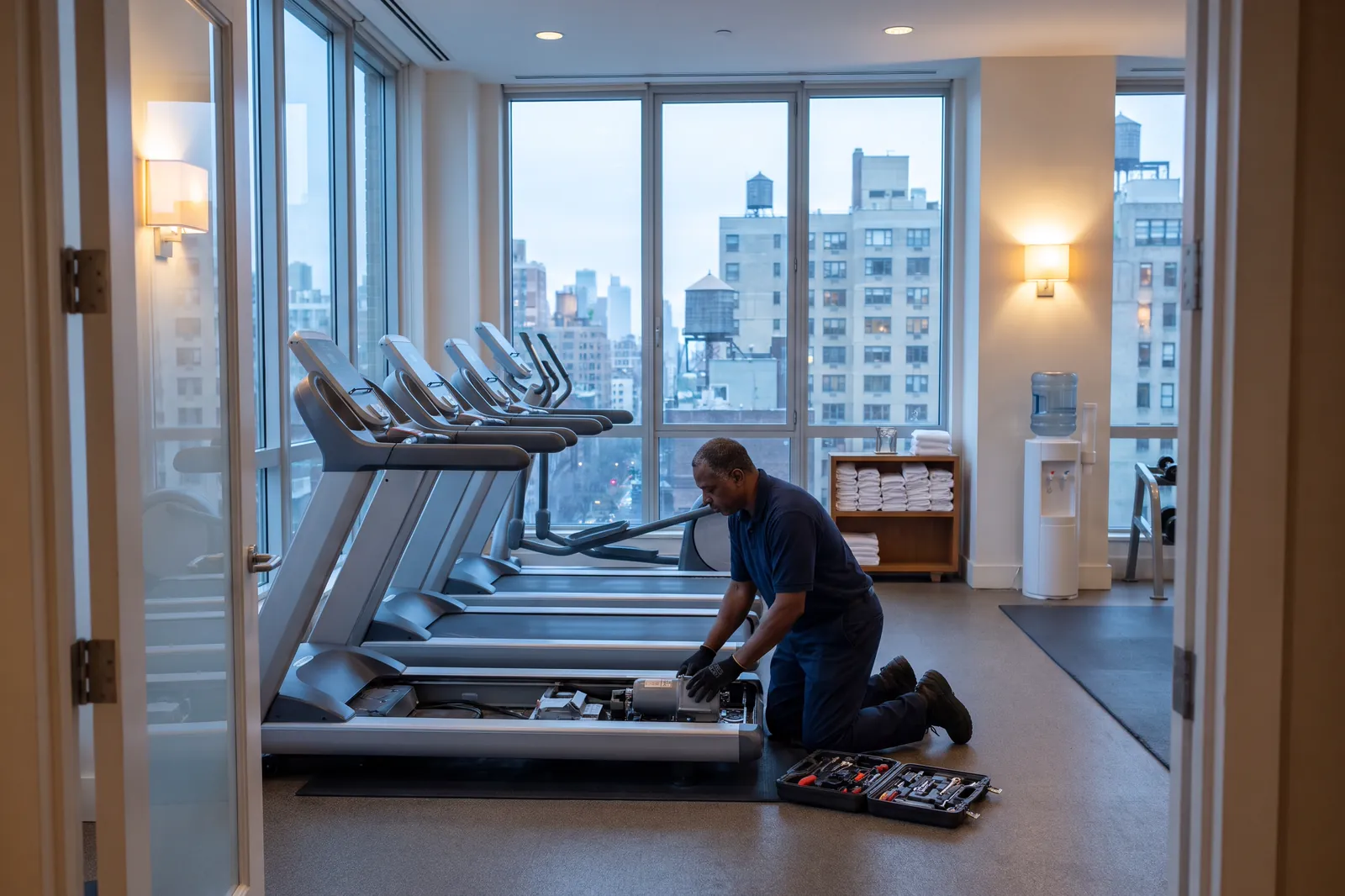
Emergency stop failed? A treadmill that won't stop on command is one of the most serious hazards in any gym. Unplug it, remove the safety key and tag it out until a technician has repaired it.
Strength and cable machine checks
| Check | How to check | Take it out of service if |
|---|---|---|
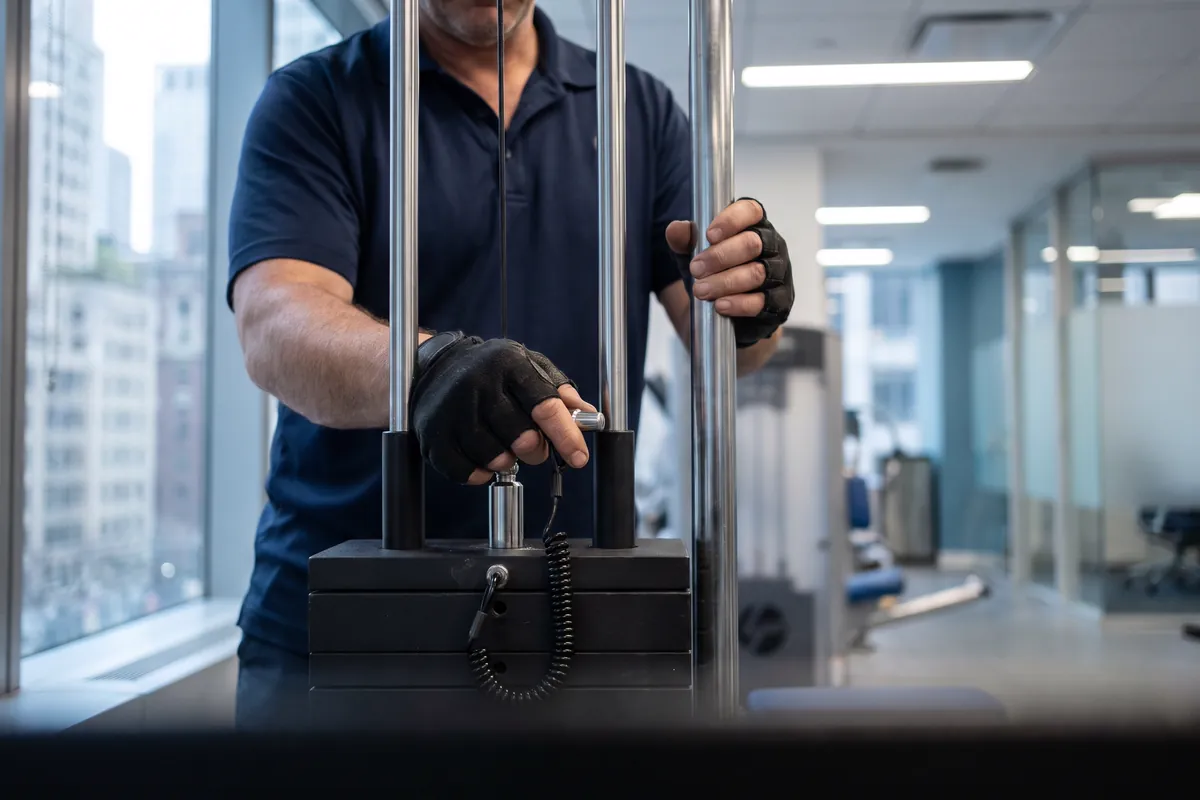
| Cables | With no weight selected, look along the full length, especially where cables bend around pulleys | Any fraying, kinks, bulges, cracked coating or exposed strands |
| Pulleys | Spin each one by hand and check the cable sits in the groove | A pulley is cracked, wobbles, grinds or lets the cable jump out |
| Selector pins | Insert the pin at several plates | The pin is bent, missing or won't seat all the way |
| Weight stack and guide rods | Lift a light stack through its full range | Plates stick or jump, or the top plate is cracked |
| Pop-pins and seat locks | Adjust each one, then push on it | A pin doesn't lock or a seat slips |
| Frame and upholstery | Look at welds, bolts and pads | Cracked welds, loose bolts or torn pads with exposed edges |
Cable checks are visual only: never flex a cable or test it under load with your hands. See the signs a cable machine needs a new cable for what damage looks like in close-up.
Racks, benches and free weights
| Check | How to check | Take it out of service if |
|---|---|---|
| Racks and rigs | Push each upright firmly from several angles; check floor anchors where the rack is designed to be anchored | It shifts or rocks, or an anchor is loose |
| J-hooks and safety arms | Check that pins seat fully and protective liners are intact | Hooks are cracked, liners are worn through or pins don't lock |
| Benches | Test each adjustment, then sit and lean firmly | Locks slip, legs wobble or the frame is cracked |
| Dumbbells, plates and collars | Check handles and heads; look for cracked plates | Dumbbell heads are loose, plates are cracked or collars are broken |
| Storage | Check plate trees and dumbbell racks | Anything tips, or weights are stored where they can fall |
Floors, space and power
- Mats and flooring: curled edges, gaps between tiles, wet spots and trip points.
- Clearance: walkways are open, and the space behind each treadmill matches what the manual calls for (often several feet behind the deck).
- Cords: no cords across walkways, no extension cords or daisy-chained power strips, and no overloaded outlets.
- Lighting and airflow: every light works, and nothing blocks the vents on powered machines.
- Emergency basics: a phone within reach, first-aid supplies stocked, and emergency procedures posted where people can see them.
What to do when something fails
A machine that fails a check comes out of service right away. Follow the same five steps every time:
- Disable it. Unplug powered equipment and remove the safety key. On strength machines, remove the selector pin or the cable attachment, and block access if you need to.
- Tag it. Put an out-of-order sign where people will see it before they step on or sit down.
- Record it. Note the problem, take a photo, and write down the make, model and serial number.
- Report it. Tell whoever manages the room and request a repair with those details.
- Close it out. Record when it was repaired and who did the work, then return it to service.
Want a professional safety inspection? Technicians check what a monthly walk-through can't see: motors and wiring, internal belts and bearings, cable routing and frames. Add it to a preventive maintenance plan so it happens on a schedule, with a written report after each visit.
Keeping the record
Keep the signed checklists together, on paper or scanned. For each month, note the date, who did the check, each machine's result and any action taken. Over time the record shows patterns (the same treadmill failing month after month), supports budget requests and repair-or-replace decisions, and documents that inspections actually happened. For the full calendar of cleaning and lubrication tasks beyond safety, use the gym equipment maintenance schedule.
Make it a routine
- Assign one person to own the check, plus a backup for vacations.
- Put it on the calendar for the same week every month, such as the first Monday.
- Review failed items with management, the board or the managing agent so repairs get approved quickly.
- Restock out-of-order signs and spare safety keys after each round.
When to call a technician
Call for anything that fails a check, and for anything you can't judge from the outside. A monthly visual check is not a substitute for a professional inspection of:
- Motors, motor controllers, wiring and other electrical parts
- Internal drive belts, bearings, bushings and rollers
- Cable and pulley replacement, and correct cable routing
- Welds, frames and other structural parts
- Rack and rig anchoring
Certified, licensed, insured and background-checked technicians handle strength machine repair, cardio repairs and safety inspections on-site, and you get a written quote before work starts. For facilities, pairing this monthly check with quarterly professional service covers both the visible and the hidden problems.