
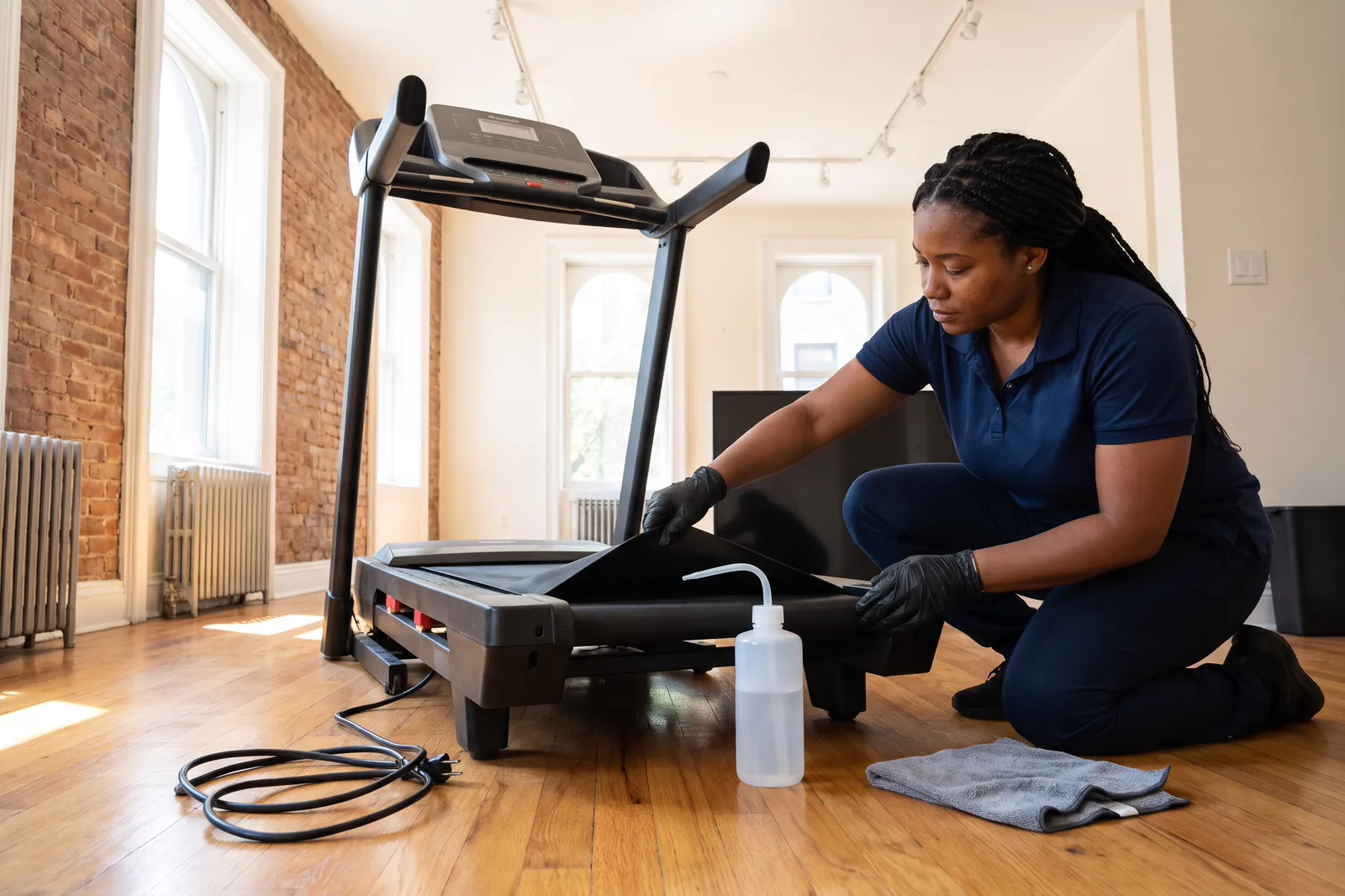
Key takeaways
- Check your manual first. Most home treadmills take 100% silicone treadmill lubricant, but some machines use a wax-coated deck or pre-lubricated belt that shouldn’t be lubricated at all.
- With light home use, check the belt about every three months and lubricate when the deck feels dry (typically every three to six months). Check monthly if you use it daily.
- Always unplug the treadmill, apply a thin line of lubricant under the belt, never on top, then walk it in at a slow speed.
- Skip WD-40, household oils and general-purpose sprays, and don’t overdo it: too much lubricant causes slipping and grit.
- If the belt still drags or the motor smells hot after lubricating, the belt or deck is probably worn and needs a technician.
Most of the treadmill problems technicians see in homes start the same quiet way: a dry belt. When the lubricant between the running belt and the deck wears off, the belt grips the deck instead of gliding over it. That friction heats everything up, makes the drive motor pull more current, and slowly wears the belt, the deck and the motor controller (the circuit board that powers the motor). The fix is cheap and takes about 15 minutes, as long as you use the right product and the right amount.
Why a treadmill belt needs lubrication
The running belt is a loop of fabric-backed rubber or PVC that slides over a flat board called the deck. Every footstrike presses the belt down onto that board. A thin film of lubricant lets the belt slide under your weight with very little drag. As the film wears away, three things happen:
- The motor works harder. More drag means more current, more heat and more strain on the motor brushes and controller.
- The belt and deck wear faster. The underside of the belt glazes and the deck surface wears into a groove where your feet land.
- The ride gets worse. You may feel the belt hesitate as you land, or hear a squeak or hum that wasn’t there before.
Left long enough, a dry deck can lead to a slipping belt, overcurrent error codes or a burned-out controller. That’s a much bigger repair than a bottle of lubricant.
Does your treadmill need lubricant at all?
Before you buy anything, find the owner’s manual (most manufacturers post them online by model number). Treadmills generally fall into two groups:
- Silicone-lubricated decks. Most home treadmills. The manual will call for 100% silicone lubricant and give a schedule in months, hours or miles.
- Wax-based or “maintenance-free” systems. Many commercial treadmills and some premium home models use a wax-impregnated deck or belt. These are designed to run without added lubricant, and adding silicone can make the belt slip and may affect warranty coverage.
If the manual says not to lubricate, don’t. If you can’t find it, the model and serial number are usually on a label near the motor hood or at the front of the frame, and a technician can tell you which system you have.
How to tell if the belt is dry
You don’t need to lubricate on a fixed date if the deck is still slick. Check it instead:
- Unplug the treadmill.
- Lift the edge of the belt at the middle of the deck and slide your fingertips underneath onto the deck surface.
- It should feel slightly slick or waxy. If it feels dry, chalky or rough, it’s time.
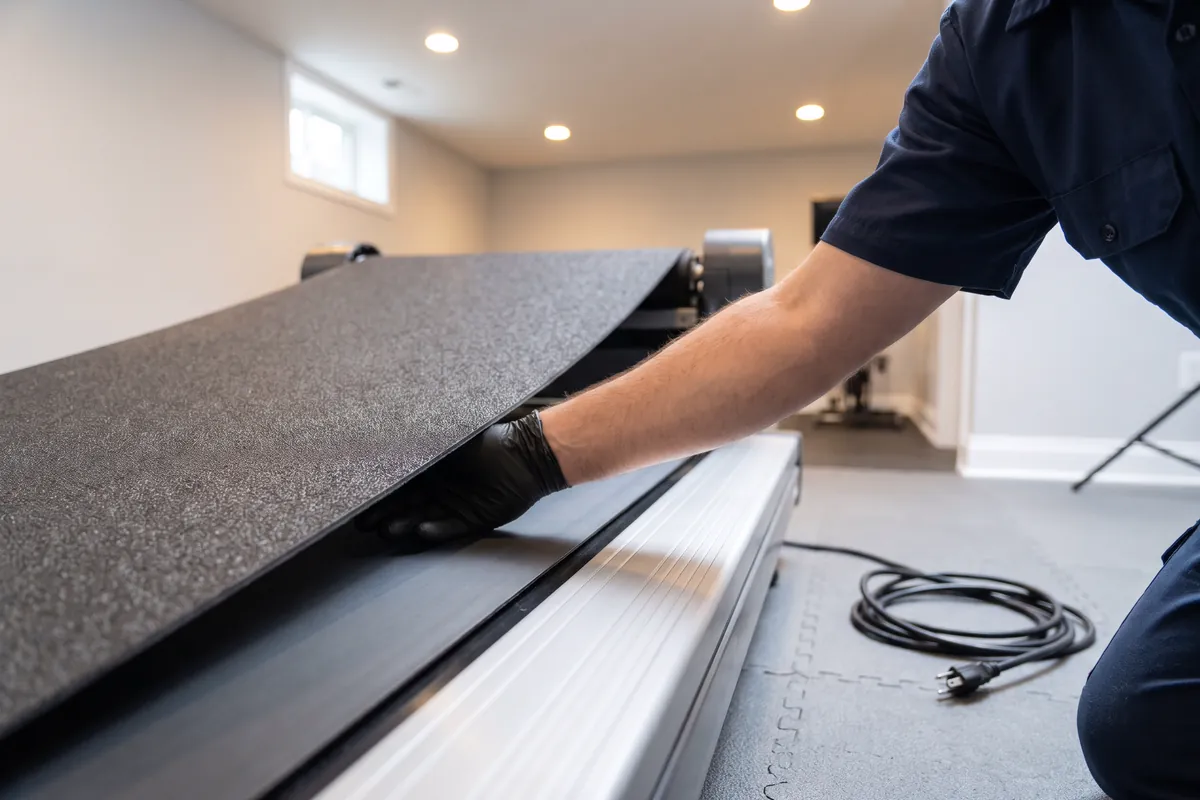
Other clues: the belt hesitates when your foot lands, you hear a new squeak or friction hum while walking, or the motor hood feels warmer than usual after a short workout. If you see a motor or overcurrent code, read our guide to treadmill error codes before running it again.
Tools and supplies
- 100% silicone treadmill lubricant with a long applicator nozzle (or the product your manual specifies).
- Two clean, lint-free cloths and a vacuum with a crevice tool.
- The correct hex key for the rear roller bolts, only if your belt is too tight to lift.
- A flashlight and your owner’s manual.
How to lubricate a treadmill belt, step by step
- Unplug it and remove the safety key. Switch the treadmill off and pull the plug from the wall. Turning it off isn’t enough when your hands are near the rollers.
- Clean first. Vacuum under and around the treadmill and along both edges of the belt. Wipe the side rails and the exposed edges of the deck with a dry cloth. Dust mixed with fresh silicone turns into grit.
- Get access under the belt. On most home treadmills you can lift the belt edge at the middle of the deck a few inches without loosening anything. If it’s too tight, loosen both rear roller bolts by the same number of quarter turns and write the number down.
- Apply a thin line under the belt. Lift one side, slide the nozzle toward the center of the deck and apply a thin line along the area where your feet land. Repeat on the other side. Use the amount on the lubricant label or in your manual; more is not better.
- Restore the tension. If you loosened the bolts, turn each one back exactly the same number of turns.
- Walk it in. Plug the treadmill back in, attach the safety key and walk at a slow pace for three to five minutes, moving across the full width of the belt to spread the lubricant.
- Wipe up and check tracking. Wipe any lubricant off the top of the belt, the side rails and the floor; it’s a slip hazard. The belt should run centered. Note the date so you know when to check again.
How often to lubricate a treadmill belt
Your manual’s schedule comes first. Without one, these general intervals are a sensible starting point:
- Light home use (a few times a week): check about every three months; lubricate when dry, typically every three to six months.
- Daily or heavy home use, including marathon training: check monthly.
- Commercial and building gyms: follow the manufacturer’s schedule with a quick monthly inspection and professional service every quarter. Many commercial machines use wax systems, so the right step may be cleaning, not lubricating.
Hot, dry, dusty rooms dry a deck out faster. A treadmill near a radiator in a city apartment or in a dusty garage may need checking more often. Our gym equipment maintenance schedule puts belt checks alongside the rest of your routine.
Mistakes that do more harm than good
- The wrong product. WD-40, cooking oil, motor oil and many hardware-store silicone sprays (some contain petroleum solvents) can soften the belt backing and damage the deck coating.
- Too much lubricant. The excess squeezes out onto the rails and floor, collects dust and can make the belt slip on the drive roller.
- Lubricating a wax-based deck. If the manufacturer says no lubricant, adding silicone causes problems rather than preventing them.
- Spraying the top of the belt. That’s a fall waiting to happen. Lubricant goes on the deck underneath only.
- Overtightening the belt afterward. Extra tension loads the roller bearings and the motor. Return the bolts to where they were.
- Expecting lubricant to fix a worn belt. A belt with a glazed underside or frayed edges, or a deck worn smooth where you land, needs replacing.
Rather have a pro handle it? A certified technician can check whether your treadmill should be lubricated at all, clean and lubricate the deck, set belt tension and tracking, and test the motor while they’re there. Book it as part of treadmill repair and service or a preventive maintenance plan. You’ll get a written quote before any work starts.
When to call a technician
Lubrication is routine maintenance. Stop and get the treadmill inspected if any of these show up:
- The belt still hesitates, drags or slips after a fresh lube and walk-in. See why treadmill belts slip for the other usual causes.
- A burning smell, a hot motor hood, a tripped breaker or a motor or overcurrent error code.
- Frayed belt edges, a shiny glazed underside, or a deck that’s grooved, cracked or warped.
- The belt won’t stay centered after small, equal tracking adjustments.
- It’s a commercial or building treadmill that many people use and needs documented service.
On a service visit, a technician checks belt and deck wear, measures how much current the motor draws under load (a dry or worn deck shows up here before it shows up anywhere else), lubricates or replaces parts as needed, and test-runs the treadmill at every speed and incline.