
Key takeaways
- Free treadmills are rarely free. Budget for moving it, a tune-up, and the chance of a hidden motor, deck or controller problem.
- A quality treadmill commonly weighs 250 to 400 pounds. Stairs, turns and doorways are where people, walls and machines get hurt.
- Before pickup, run it through every speed and the full incline, test the stop button, look under the belt, and ask why it’s being given away.
- Check the model for safety recalls and parts availability. A discontinued model with a failed board may not be worth fixing.
- If the total gets close to the price of a new entry-level treadmill with a warranty, pass, or have it inspected first.
You’ve seen the listing: a big, gym-quality treadmill, free to whoever hauls it away. The owner just wants the space back. It’s tempting, and sometimes it really is a good deal. But technicians see the other side of these deals all the time: the machine that wouldn’t fit up the stairs, the belt that was worn through, the motor that had been running on a bone-dry deck for years. Before you rent a truck and recruit friends, count the real costs.
Cost 1: Getting it home
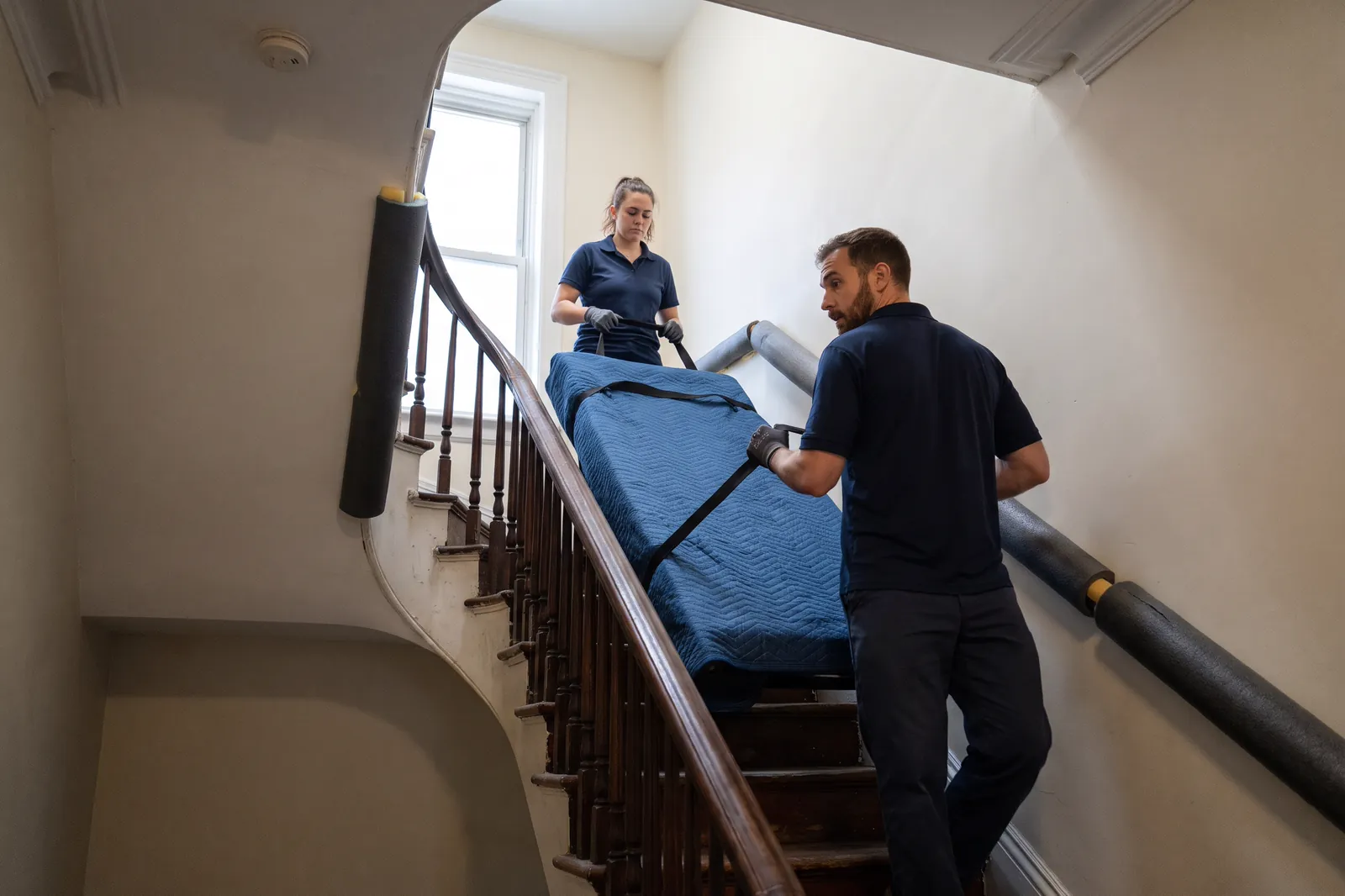
A quality treadmill commonly weighs 250 to 400 pounds, and it’s top-heavy and awkward. Moving one without the right equipment risks three kinds of damage:
- To people: back strains, crushed fingers and falls on stairs are common in do-it-yourself moves.
- To property: gouged floors, dented walls and broken door frames, in the old home and the new one.
- To the treadmill: the console, its wiring and the motor controller (the board that powers the motor) are easily damaged by a drop or a bad tilt, and folding models can unlock and swing open.
In New York there’s more to plan: walk-up stairs, tight landings, elevator reservations and padding, and buildings that require a certificate of insurance from anyone moving equipment in. Measure every doorway and turn first. Our guide to moving gym equipment in an NYC building covers the details, and professional gym equipment moving is usually the first real cost of a free treadmill.
Cost 2: The overdue tune-up
People rarely give away treadmills that were lovingly maintained. A machine that’s been sitting unused, or used hard without service, almost always needs work before it’s safe and smooth:
- The running belt is often dry, stretched or worn. It may need lubricating, or replacing outright.
- Tension, tracking and calibration need setting so the belt runs centered and speed and incline read correctly.
- Cleaning: years of dust under the motor hood make the motor and controller run hot.
- A safety check of the emergency stop, safety key and frame.
Cost 3: Hidden damage
This is the big risk, and the previous owner may not know about it:
- A worn or cracked deck. Wear and hairline cracks often only show with the belt lifted or removed.
- A tired motor. Years of dragging a belt over a dry deck wear motor brushes and bearings.
- A failing controller or console. Some electronic faults only appear after the machine has warmed up for a few minutes.
- Incline, roller and bearing wear, which shows up as noise, stalling or an incline that won’t move.
- Rust and frame damage from years in a damp basement or garage.

Two more surprises: parts for discontinued models can be hard or impossible to find, and many commercial treadmills need a dedicated 20-amp circuit or a higher-voltage outlet that a typical apartment or spare room doesn’t have.
Do the math before you commit
| Item | Example cost |
|---|---|
| Professional move | $300 |
| Tune-up with a new running belt | $400 |
| Running total | $700 |
| If it also needs a new motor | Over $1,200 |
These are general ranges, not a price list; your written quote comes before any work starts. The point is the pattern: a “free” treadmill can quickly approach the price of a brand-new entry-level machine that comes with a full warranty. A quality commercial treadmill in good condition can still be worth it. A tired home treadmill usually isn’t.
Inspect it before pickup: a checklist
Questions to ask the owner
- What make and model is it, and how old? Is there a manual?
- How much was it used, and was it ever serviced?
- Why are you giving it away? Any error codes, noises or repairs?
- Where has it been stored, and does it need a special outlet?
Tests to run in person
- Walk on it at a slow speed, then step through the speeds. Test the full incline range, the emergency stop and the safety key.
- Listen for grinding, thumping or squealing, and sniff for a burning smell.
- Plant your foot firmly: the belt shouldn’t hesitate or slip.
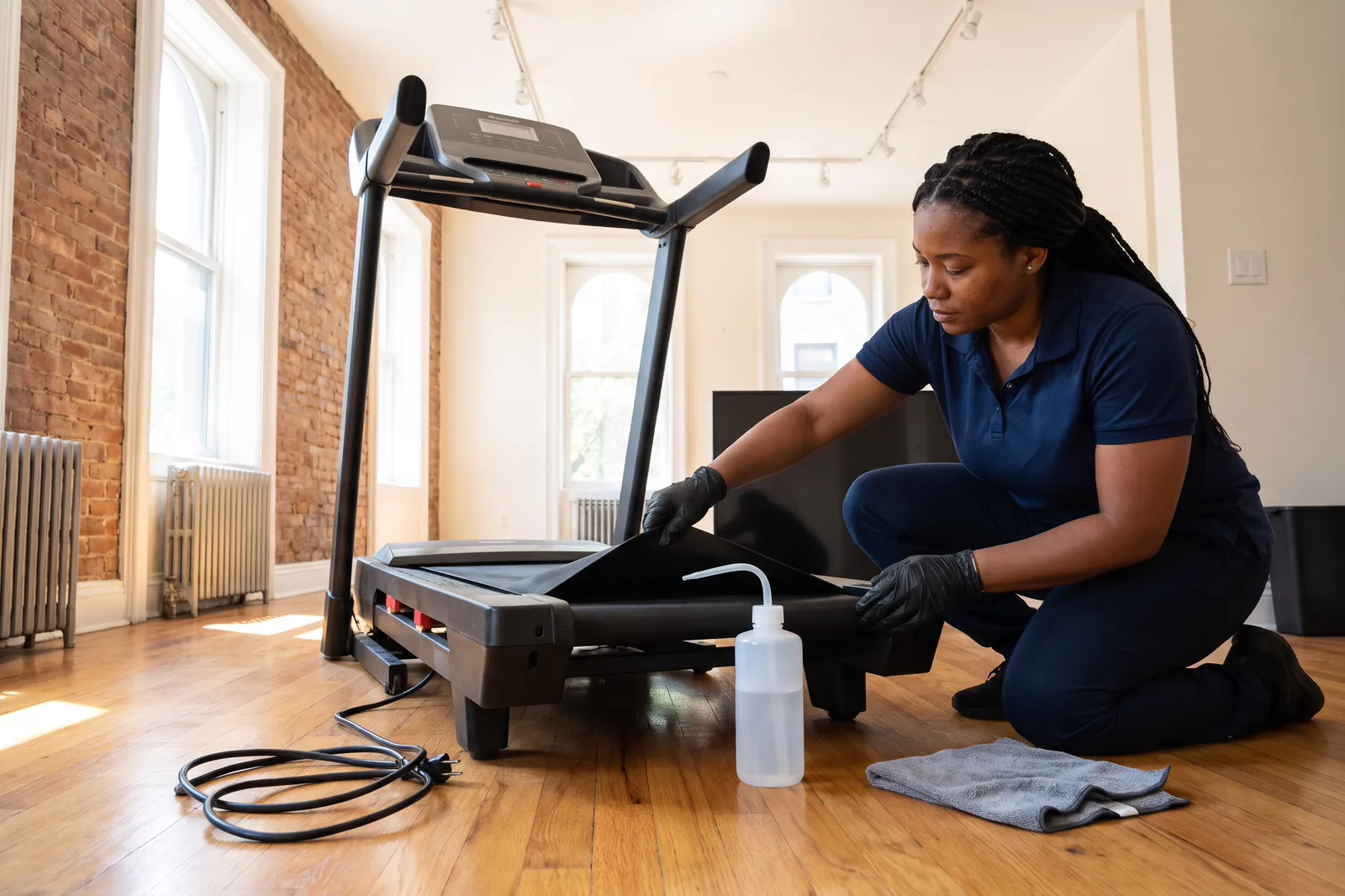
- Unplug it, lift the belt edge and look at the deck and the underside of the belt for glazing, fraying or cracks.
- Check the frame and welds for cracks or rust, and the power cord and plug for damage.
- Look the model up for safety recalls (cpsc.gov) and for parts availability.
For a broader list that covers other machines, see our used gym equipment checklist.
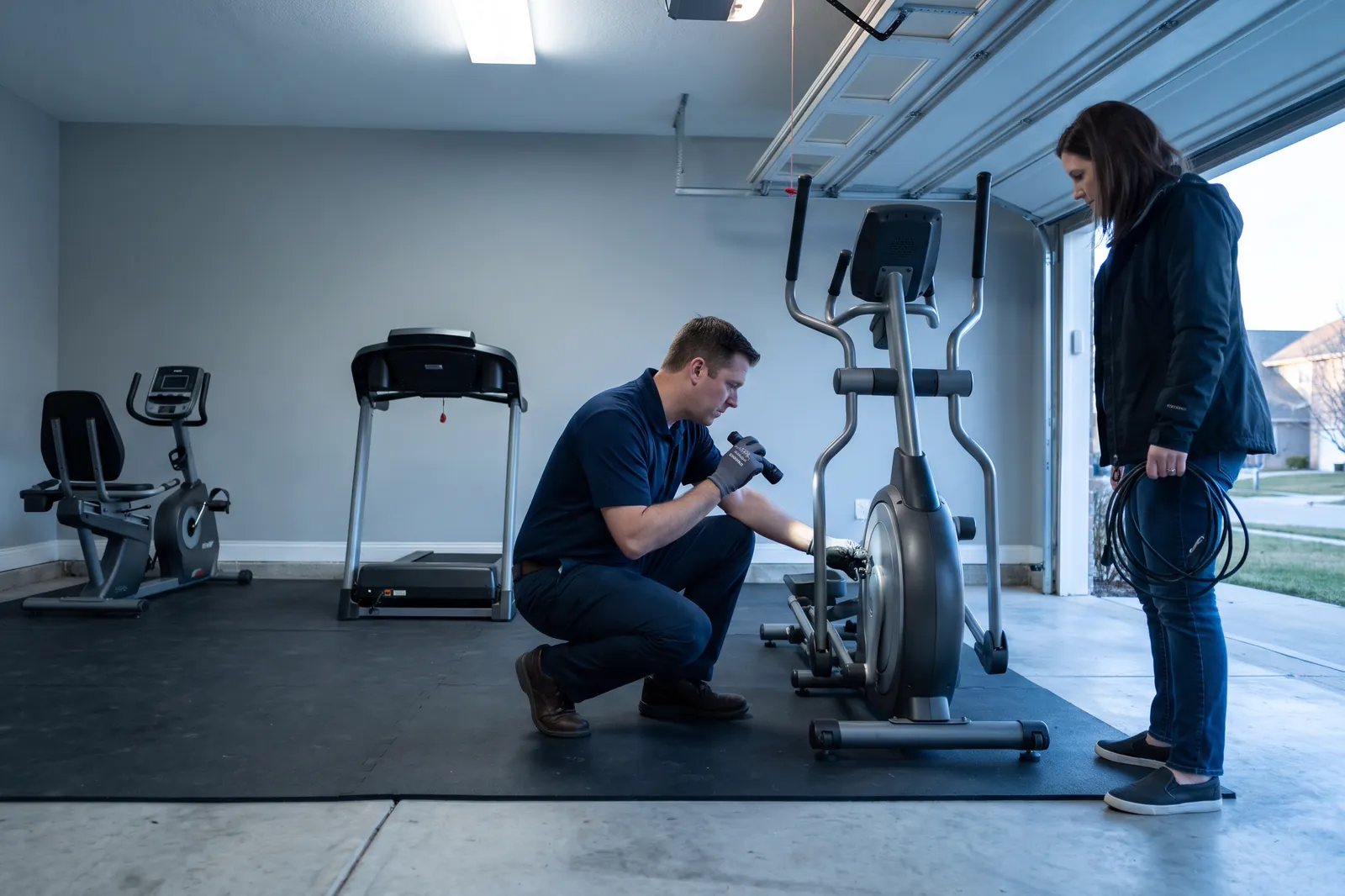
Get a professional opinion first. A certified technician can look over a used treadmill before you move it, test the motor, belt, deck and electronics, and give you a written quote for anything it needs, so you know the real cost up front. See treadmill repair for what’s covered.
When to walk away
- It smells hot or burning, or the motor struggles at walking speed.
- It shows error codes that come back after a restart.
- The frame is cracked, or the deck is cracked or badly worn.
- It’s a discontinued model and something electronic is already failing.
- It needs electrical work you can’t or won’t do, or there’s no safe way to get it into your space.
When to call a technician
Call before you commit if you can’t run the tests yourself or aren’t sure what you’re seeing, and after the move for a tune-up before anyone runs on it: belt and deck check, lubrication if your model takes it (see our belt lubrication guide), tension, tracking, calibration and a safety test. If you’re buying it in parts and putting it back together, professional installation makes sure it’s assembled, leveled and tested correctly.