Key takeaways
- “Slipping” means the running belt briefly loses grip on the drive roller when your foot lands. A belt that drifts to one side is a different problem (tracking).
- Most slipping comes from loose belt tension, a dry or over-lubricated deck, or a worn running belt. Check those first.
- Adjust tension at the two rear roller bolts in equal quarter turns with the treadmill unplugged. Overtightening damages bearings and strains the motor.
- If it still slips once tension and lubrication are right, suspect the drive belt, the front roller, or the motor or motor controller.
- Stop using a treadmill that slips repeatedly. A belt that catches and releases under you is a fall risk.
A slipping treadmill belt is unnerving: you plant your foot and the belt stutters, lurches or seems to stop for a split second before catching up. It’s tempting to assume the belt is shot, but slipping is usually a symptom of something simpler. Work through the causes below in order and you’ll either fix it in half an hour or know exactly what to tell a technician.
What slipping feels like, and what it isn’t
Getting the symptom right saves time, because similar-feeling problems have different causes:
- Slipping: the belt hesitates or jerks under your footstrike, often worse at higher speed or incline, while the motor sounds normal.
- Drifting: the belt creeps toward one side of the deck. That’s tracking, covered further down.
- Surging: the speed rises and falls on its own. That points more toward the motor, the motor controller or a speed sensor.
- Stopping with a code: the console halts the belt and shows an error. Start with our guide to treadmill error codes.
How a treadmill drives the belt
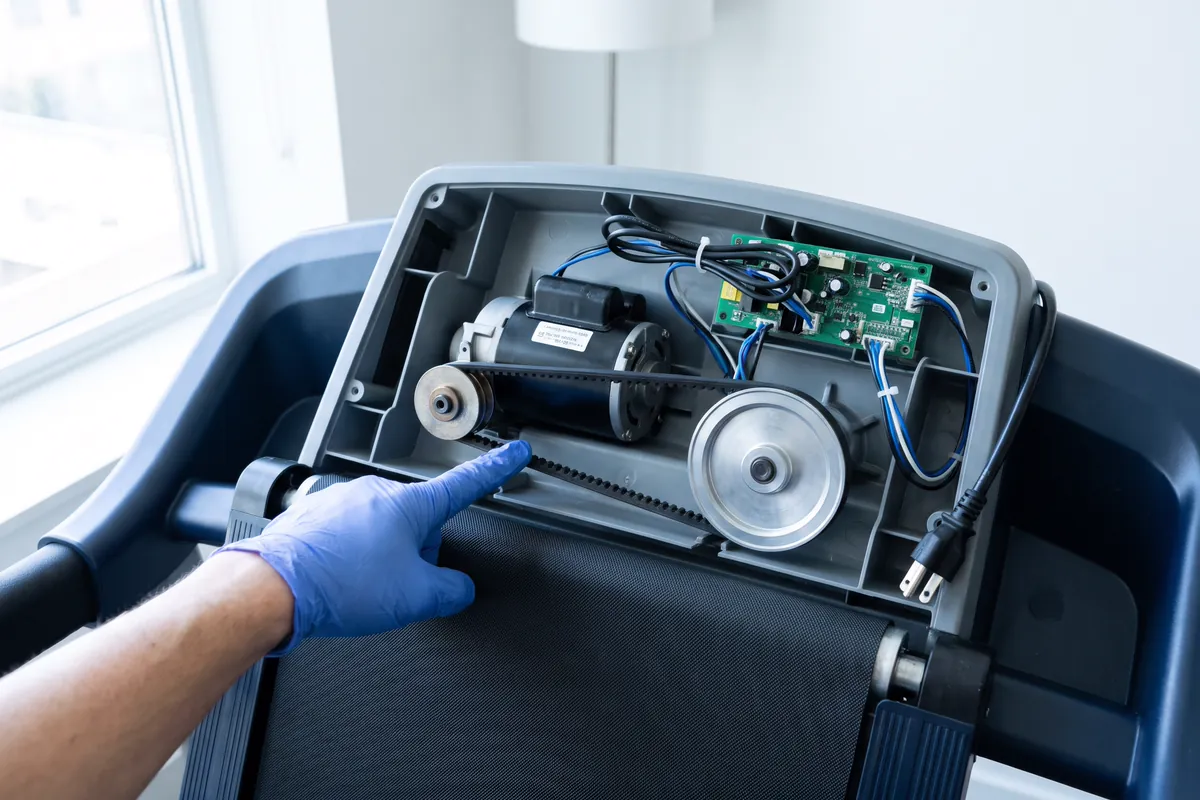
The drive motor sits under the motor hood at the front. A short drive belt connects the motor pulley to the front roller, and the front roller pulls the running belt (the one you walk on) over the deck. The rear roller just turns freely; its two bolts set the running belt’s tension and tracking. Slipping happens wherever grip is lost: between the running belt and the front roller, or between the drive belt and its pulleys.
The most common causes
1. Loose running-belt tension
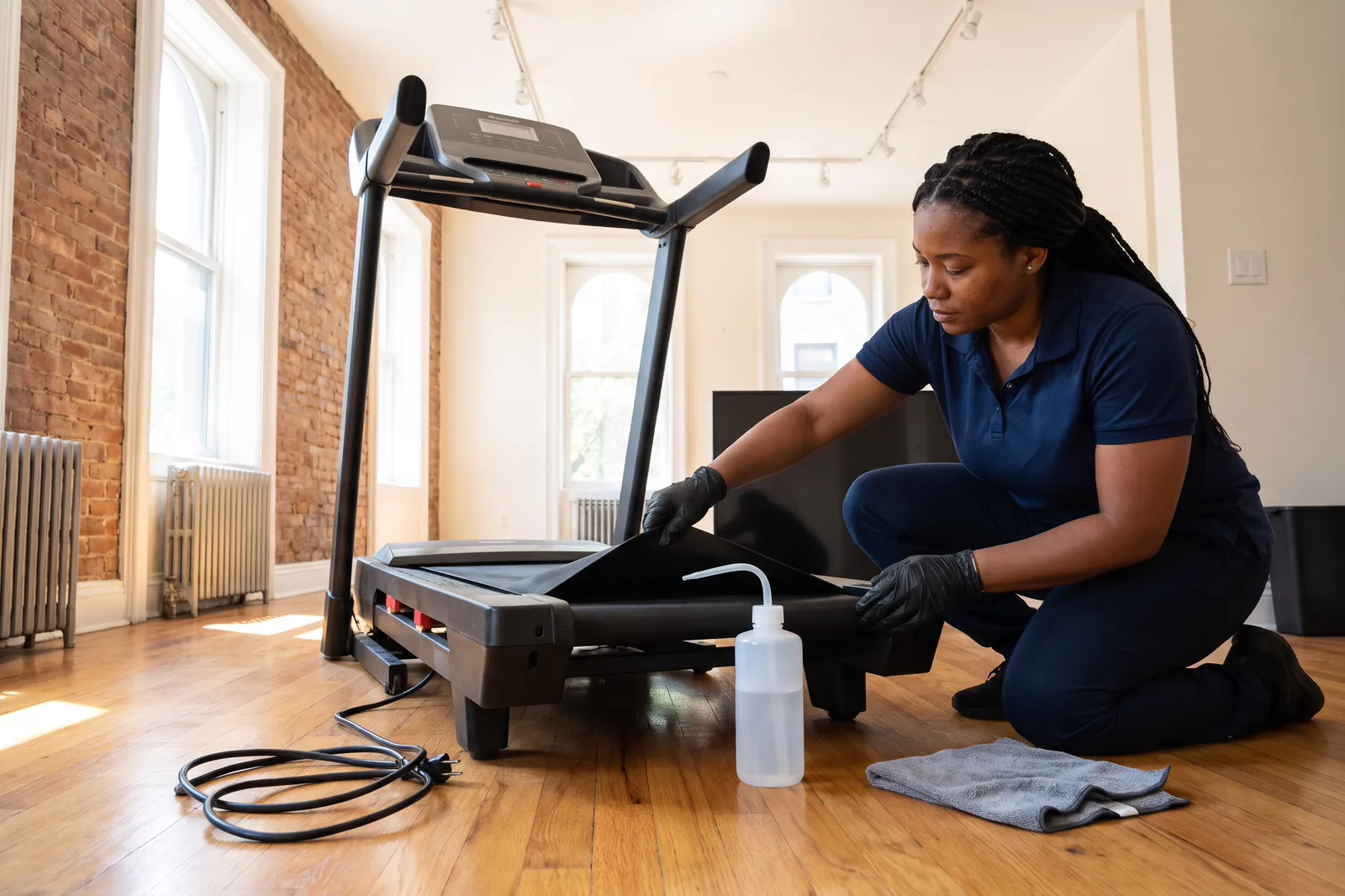
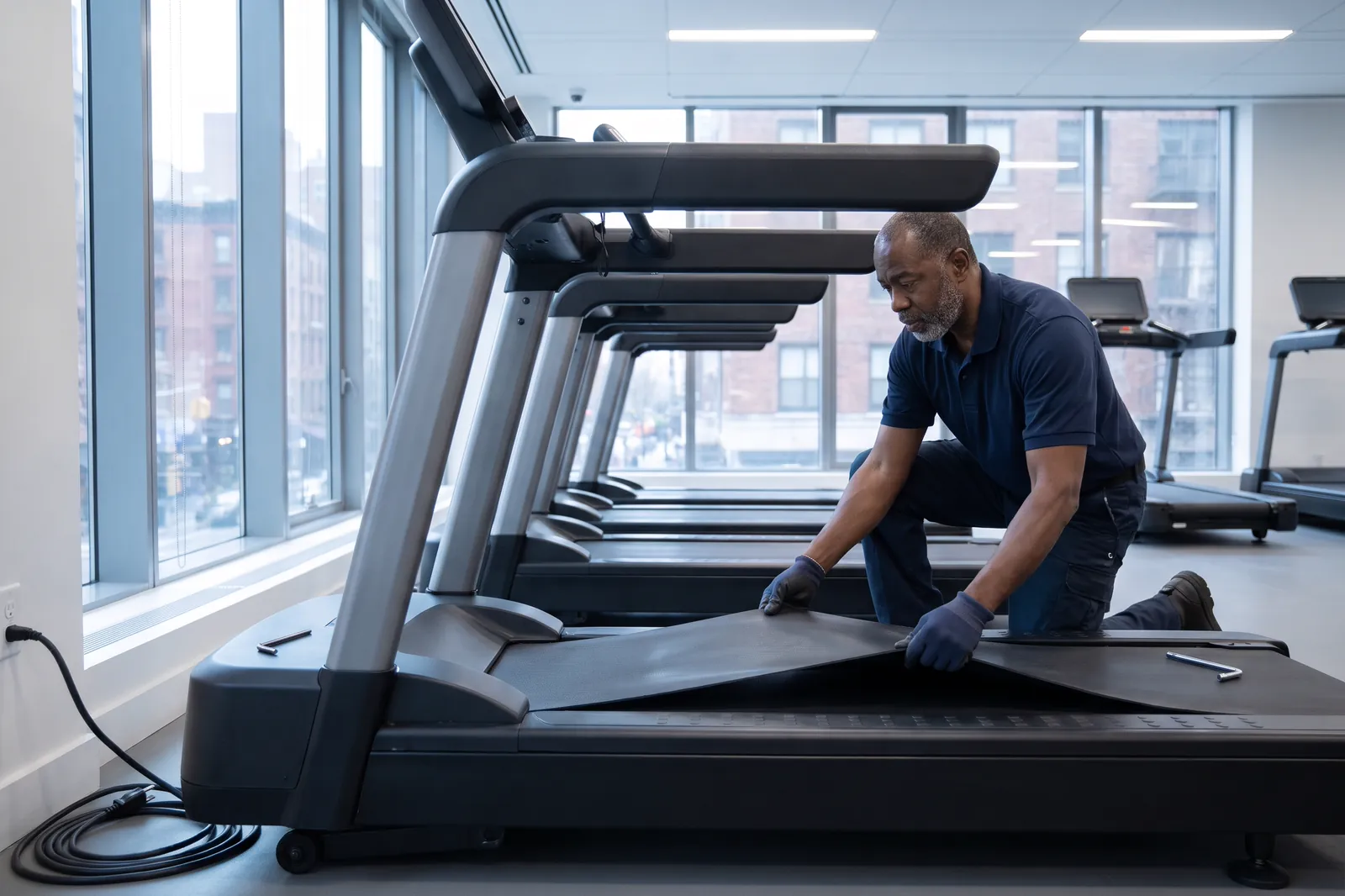
The most common cause by far. Belts stretch slightly with use and the rear roller bolts can back off. With too little tension, the belt slides on the front roller each time your foot brakes it. Quick check: with the treadmill unplugged, lift the edge of the belt at the middle of the deck. Many manuals describe about two to three inches of lift as right. If it lifts much more easily, it’s probably loose.
2. A dry deck
When the deck runs dry, friction under your foot spikes and the belt drags, which feels like hesitation. Feel under the belt: if the deck is dry or chalky, follow our treadmill belt lubrication guide (after checking that your model is meant to be lubricated).
3. Too much lubricant
The opposite problem. Excess silicone migrates onto the front roller and the belt loses grip. Signs include lubricant on the side rails or floor and a belt that slips right after you lubricated it. Wipe away the excess, run the belt slowly to work off the rest, and don’t add more.
4. A worn or stretched running belt
If the tension bolts are already turned in a long way, the belt has stretched. A glazed, shiny underside, frayed edges or a lifting seam all mean replacement. A worn belt also wears the deck, so the two are often checked and replaced together.
5. A worn drive belt
If the running belt hesitates mainly when you push off hard, run fast or use incline, and you sometimes hear a brief squeal, the drive belt may be glazed, cracked or loose on its pulleys.
6. Front roller, motor or controller problems
The front roller’s surface can wear smooth or get coated in lubricant. A weak drive motor or a failing motor controller (the board that powers the motor) can’t hold speed under load, so the belt bogs down with every step. These usually come with other clues: a hot motor hood, a burning smell, a hum, a tripped breaker or motor-related error codes. Regular use above the treadmill’s weight rating causes the same strain.
Check in this order
- Unplug it and remove the safety key. Nothing below needs power except the walk test.
- Lift test for tension at the middle of the deck.
- Feel the deck for dryness or excess lubricant, and look for silicone on the rails and floor.
- Inspect the belt for a glazed underside, frayed edges or a lifting seam.
- Note when it slips: all the time, or only at speed, on incline or under a heavier runner?
- Feel and smell the motor hood after a short walk. Hot, burning or humming means stop and call.
How to adjust treadmill belt tension safely
You’ll need the hex key that fits the rear roller bolts (often supplied with the treadmill) and your manual.
- Unplug the treadmill. Find the two adjustment bolts at the back end of the deck, one on each side, usually behind holes in the end caps.
- Turn both bolts clockwise one quarter turn. Always the same amount on each side so the belt stays centered.
- Walk test. Plug in, clip on the safety key and walk at a slow pace while holding the handrails. Plant your foot firmly as if braking. The belt should not hesitate.
- Repeat in quarter turns until the hesitation stops, unplugging before each adjustment.
- Stop if it doesn’t help. If several quarter turns haven’t cured it, more tension won’t. An overtightened belt overloads the roller bearings and the motor; look at the other causes instead.
If the belt drifts to one side
Tracking is set with the same bolts, one at a time. If the belt has moved toward the left, stop the belt and turn the left bolt clockwise a quarter turn (or the right one counterclockwise), then run it slowly for a minute and watch. Small adjustments, plenty of patience. Keep hands, hair and loose clothing well away from the rollers, and never reach near them while the belt is moving. A belt that won’t stay centered after several small adjustments may have a damaged edge, a worn roller or a frame that isn’t level.
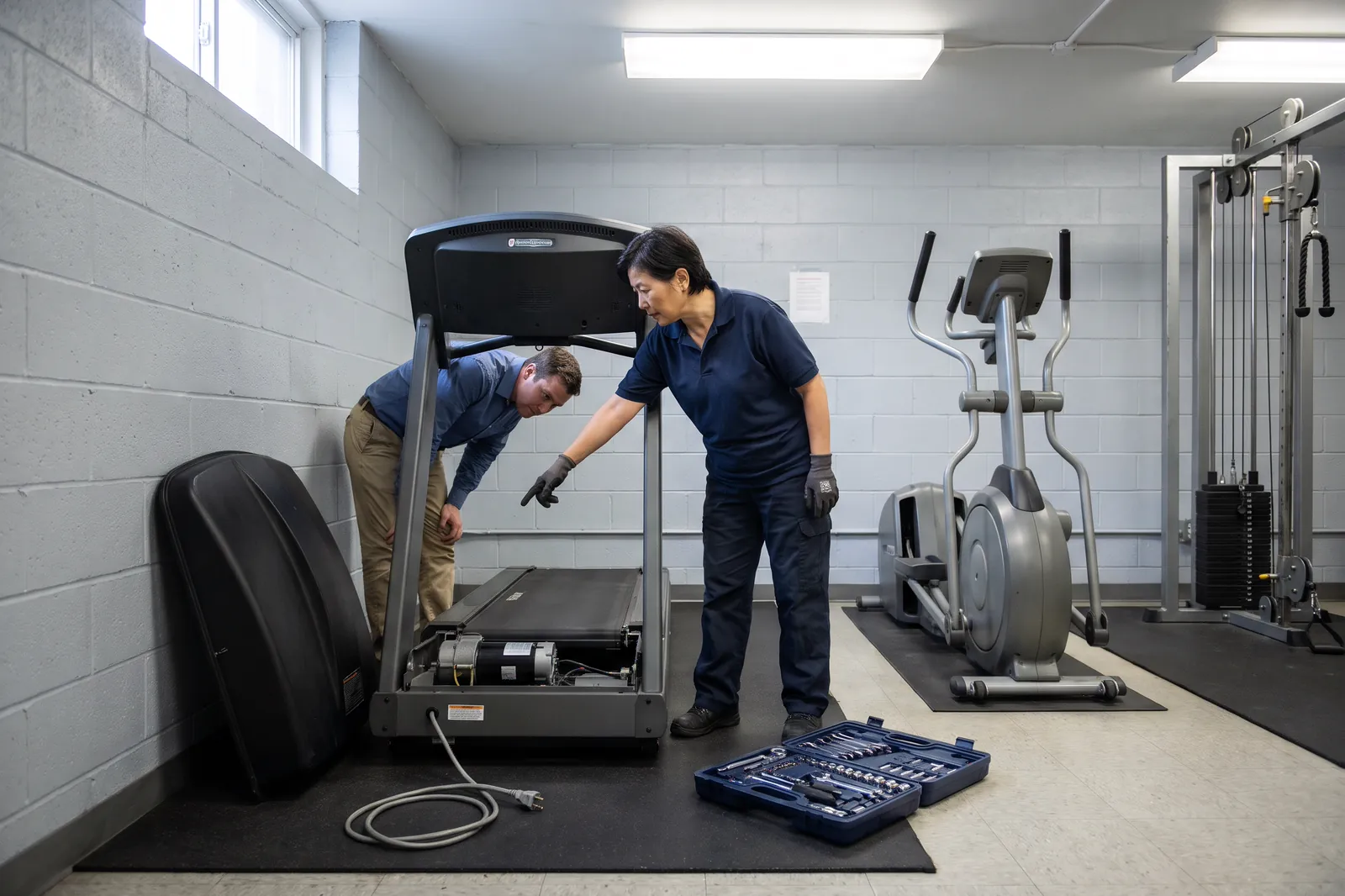
Still slipping after the basics? A certified technician can measure motor load, inspect the drive belt, rollers and deck, and set tension and tracking correctly, usually in one visit. See treadmill repair for what’s included, then send us the make, model and a short video of the problem. You’ll get a written quote before any work starts.
When to call a technician
Book a repair visit if any of these apply:
- The belt still slips after tension and lubrication are correct.
- You see a glazed belt, frayed edges, a lifting seam or a worn, grooved deck.
- Slipping comes with a burning smell, a hot motor hood, humming, tripped breakers or error codes.
- You’d need to remove the motor hood to check the drive belt and you’re not comfortable working around the motor and circuit boards.
- It’s a commercial or shared building treadmill: take it out of service with a clear sign until it’s fixed.
If the treadmill is older and the fix involves the motor or controller, it’s worth weighing the cost against replacement. Our repair vs. replace guide walks through that decision.